
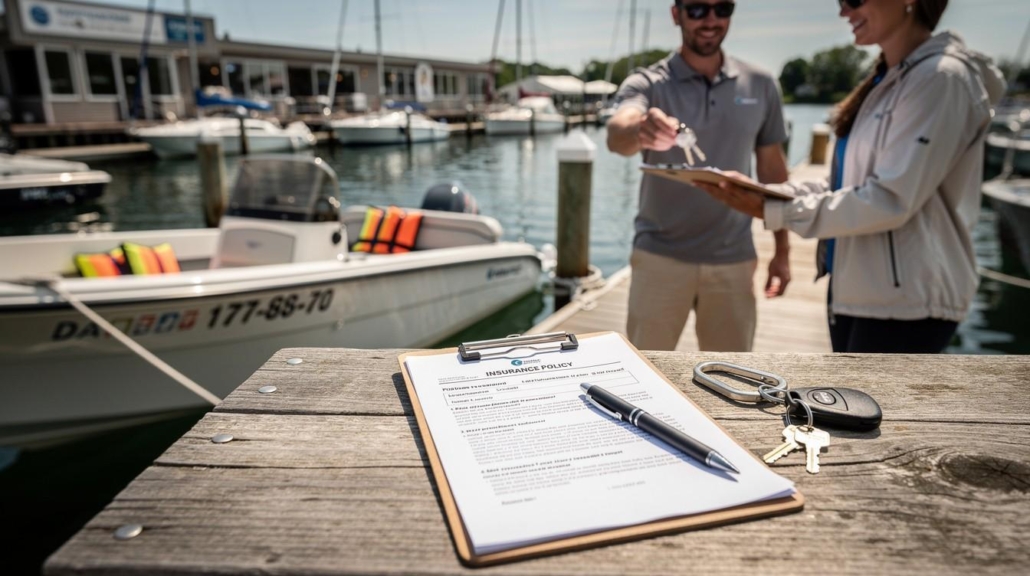
Boat Insurance for Rentals: Protect Your Vacation Property
Boat owners who rent out their vessels face unique risks that standard homeowner policies simply don’t cover. Guest injuries, property damage, and lost rental income can quickly turn a profitable venture into a financial nightmare.
At North Point Insurance Group, we’ve seen firsthand how the right boat insurance for rentals protects owners from these costly scenarios. This guide walks you through the coverage types you need and how to choose a policy that actually fits your business.
Why Boat Rental Insurance Actually Matters
Boat rental income looks attractive until a guest gets injured or your vessel sustains serious damage. At that point, standard homeowner policies exclude rental activity entirely. Insurance companies classify rented boats as commercial operations, which means your personal boat policy won’t respond to claims. The Florida Safe Boating Act of 2022 requires renter coverage in that state, and compliance alone makes dedicated boat rental insurance non-negotiable if you operate there. The real reason to carry this coverage goes beyond legal requirements-it protects the actual money your rental business generates. A single liability claim from a guest injury can reach $100,000 or more, and hull damage from negligence can cost $300 to $2,000 depending on severity. Without proper coverage, you remain personally liable for these amounts, which means the rental income you counted on gets consumed by repair bills and legal expenses instead.
What Your Existing Policies Won’t Cover
Your homeowner policy contains a business-use exclusion that explicitly denies coverage when you rent your boat for income. Your personal boat insurance, if you own one, typically covers your own liability when you operate a rental vessel up to your policy limits, but it won’t pay for damage to the rental boat itself. Credit card coverage proves equally unreliable-most cards exclude boat rentals entirely, and even premium cards with boating coverage usually cap protection at horsepower limits far below what modern rental vessels require. Homeowners insurance might extend minimal personal liability to rented watercraft in rare cases, but these gaps leave you exposed to substantial out-of-pocket costs.
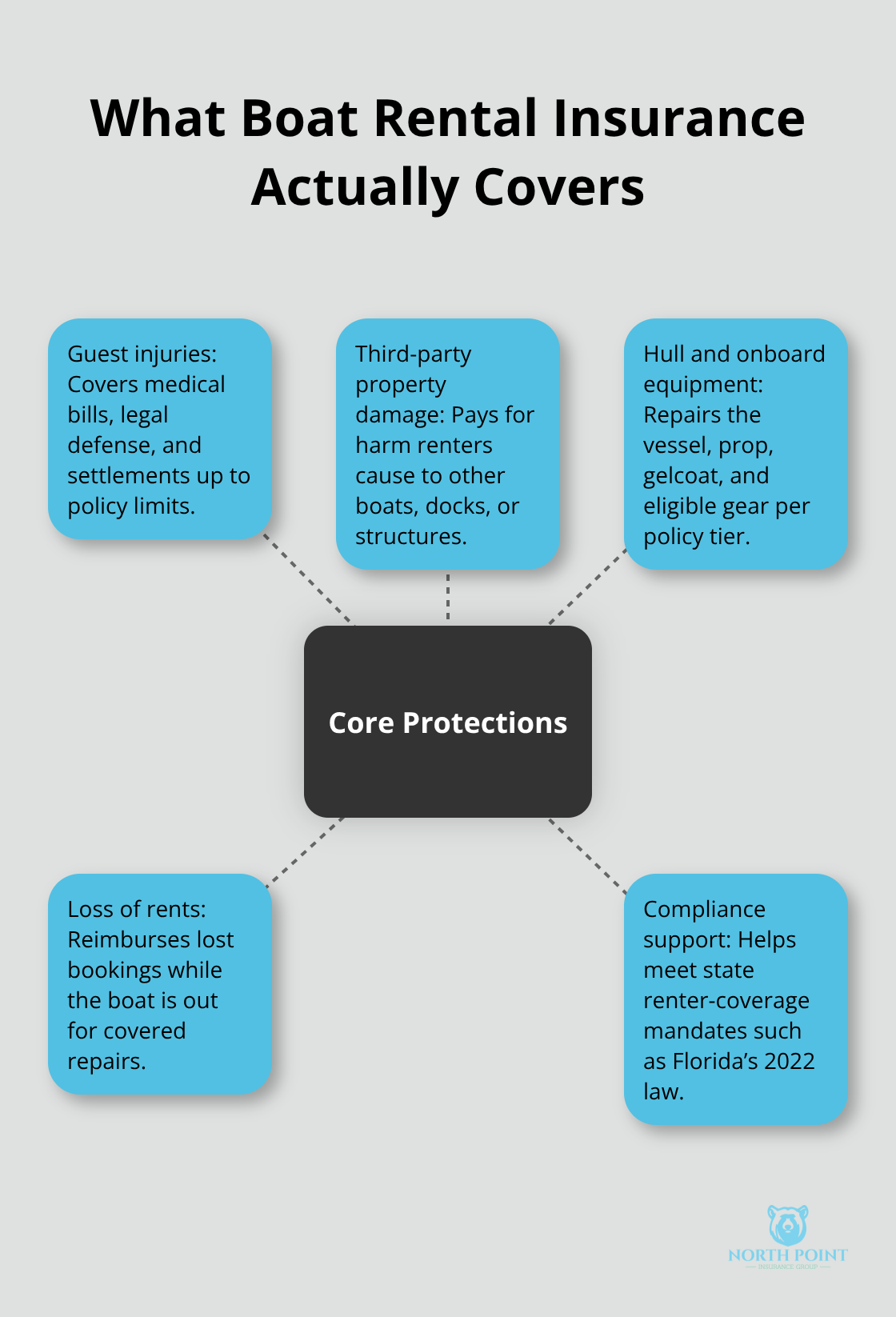
Dedicated boat rental insurance fills these voids with commercial-grade coverage that addresses the real risks: guest injuries, third-party property damage, and damage to the vessel itself depending on your policy tier.
How Damage Costs Compound Without Coverage
Propeller strikes average $200 to $800 per incident, running aground costs $300 to $2,000 or more, and upholstery tears run $100 to $500. These aren’t hypothetical numbers-rental companies consistently report these figures. Security deposits typically range from $500 to $1,000, which means any significant damage exceeds what guests leave behind, and you absorb the remainder.
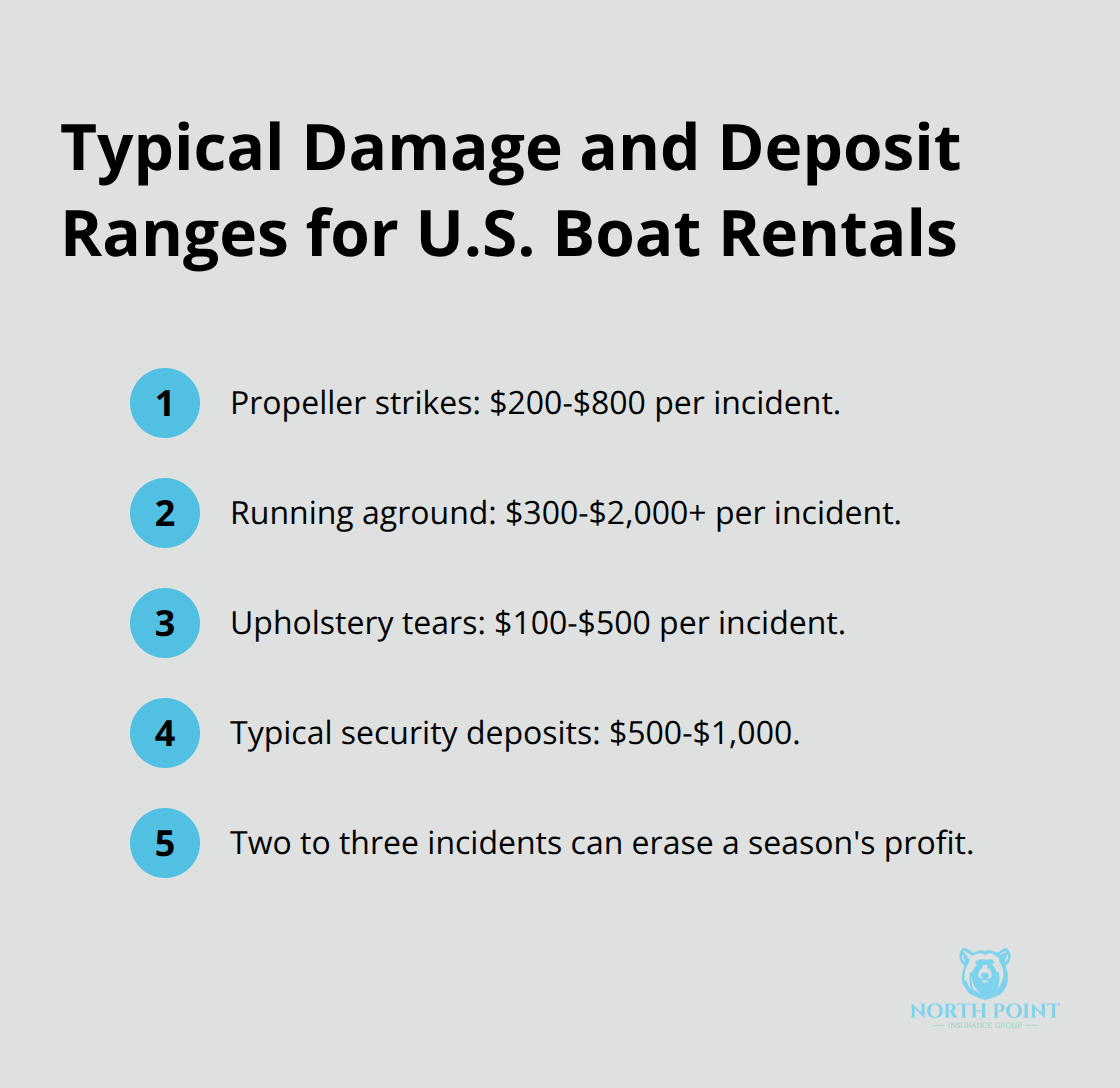
A single season with two or three damage incidents can wipe out your annual profit margin. Loss of rental income compounds the problem: if your boat sits damaged and out of service for a week during peak season, you lose both the rental fees and guest bookings that would have followed. Proper boat rental insurance covers these scenarios directly, which means damage costs don’t come from your pocket and downtime doesn’t eliminate your income stream.
The Coverage Gap That Catches Owners Off Guard
Many boat owners assume their existing policies provide some protection for rental activity. They don’t. Standard homeowner policies and personal boat policies were designed for personal use only, not income-generating operations. When you rent your boat, you shift into commercial territory, and insurers treat it accordingly. The moment a guest books your vessel, your personal coverage stops working. This gap between what owners think they have and what they actually have creates serious financial exposure. Dedicated boat rental insurance eliminates this gap by providing coverage specifically designed for the commercial reality of your operation.
Why Compliance and Protection Go Hand in Hand
Florida’s Safe Boating Act of 2022 mandates renter coverage for boat rental operations in that state. Other states may follow with similar requirements as the vacation rental industry continues to grow. Compliance isn’t just about avoiding penalties-it’s about operating a legitimate business that protects both you and your guests. When you carry proper boat rental insurance, you meet legal requirements while simultaneously protecting your assets from the financial impact of accidents, injuries, and damage. This dual benefit makes the coverage an investment in both your business’s legal standing and its financial stability.
Now that you understand why boat rental insurance matters and what gaps exist in your current coverage, the next step involves understanding which specific coverage types actually protect your rental operation.
Types of Coverage for Vacation Rental Boats
Hull and Property Damage Protection
Hull and property damage protection covers the physical structure of your vessel when guests rent it. You receive protection when someone runs aground, strikes a dock, or causes collision damage during their charter. This coverage responds to the specific damage incidents that happen most frequently: propeller strikes, running aground, and impact damage to the hull and gelcoat. Without this layer, you absorb every repair bill directly from your rental income.
The coverage limit matters significantly-you need enough to cover a complete hull replacement or major structural repair, not just minor cosmetic work. Many owners underestimate their vessel’s replacement cost and select limits that cover only 60 or 70 percent of actual repair expenses, which leaves them paying the difference out of pocket when serious damage occurs.
Liability Coverage for Guest Injuries
Liability coverage for guest injuries protects you when someone on your boat gets hurt and holds you responsible for medical bills, legal defense costs, or settlement amounts. A single serious injury claim can exceed $100,000, and without dedicated commercial liability coverage, that obligation falls entirely on you. Your personal boat policy won’t cover this scenario because it only extends liability when you operate the vessel yourself, not when paying guests are aboard.
Commercial boat rental policies typically provide liability limits up to $500,000 per person and $1,000,000 per occurrence, which matches the exposure level you face when strangers operate your equipment. This protection separates your personal liability from the rental company’s standard coverage.
Loss of Rents and Additional Coverages
Loss of rents coverage reimburses the rental income you cannot collect when your boat sits damaged and unavailable for bookings during peak season. If your vessel sits in the shop for a week during summer when you normally book back-to-back charters, this coverage replaces those lost reservation fees. The financial impact of downtime compounds quickly-a week of lost bookings at $500 per day equals $3,500 in forgone income before you account for the guests who rebook with competitors and never return.
Additional coverages worth considering include protection for onboard equipment like fishing gear, water sports equipment, and electronics, since these items disappear or get damaged regularly on rental boats. Some policies also cover liability for damage your guests cause to third-party property-like if they hit another boat or dock structure. These options allow you to build a policy that addresses the specific risks your rental operation faces rather than accepting a one-size-fits-all commercial package that includes unnecessary protection.
Understanding which coverage types protect your boat rental business sets the foundation for the next critical decision: selecting the right policy limits and comparing options across multiple carriers to ensure your protection actually matches your exposure.
How to Choose the Right Boat Rental Policy
Calculate Your Boat’s True Replacement Value
Start with your boat’s actual replacement value, not what you paid for it years ago. Most owners drastically underestimate replacement costs because they confuse market value with rebuild expense. A 30-foot cabin cruiser that sold for $150,000 might cost $180,000 to replace today due to supply chain inflation and labor costs. Contact three marine dealers in your region and request current replacement pricing on a comparable vessel. This number becomes your floor for hull coverage limits-anything below it leaves you exposed to out-of-pocket repair bills.
Document Your Rental Income Patterns
Track your actual rental patterns over the past two years. How many days per month does your boat book? What’s your average rental fee? What’s your peak season length? Owners who rent 15 days per month at $500 per day generate $90,000 annually, which means a single week of downtime costs $7,000 in lost income. Your loss of rents coverage limit should equal at least two weeks of peak-season revenue to protect against extended repairs. If you operate in Florida or plan to, the Safe Boating Act of 2022 requires specific renter coverage that Buoy provides through its per-trip insurance model-the cost varies by charter duration, boat type, renter age, and season, but the renter pays the premium rather than you absorbing it as an operator.
Review Your Damage History and Risk Profile
Track your damage history over the past three years. If you’ve had zero incidents, your risk profile differs dramatically from an operator who’s experienced propeller strikes twice. Insurers price policies based on claims history, so this data influences your final quote significantly. Operators with documented safety practices and liability waivers often qualify for better rates than those without them.
Compare Quotes Across Multiple Carriers
Comparing policies across carriers requires looking past premium alone. Request detailed quotes from at least three different insurers and ask each one to explain what their liability limits actually cover-does $500,000 per person include defense costs or is that the total payout? Does your hull coverage include unattended boat coverage when the vessel sits at your dock between rentals, or does it exclude that scenario? Does loss of rents coverage reimburse your full daily rate or only a percentage? These differences create massive variation in real-world protection.
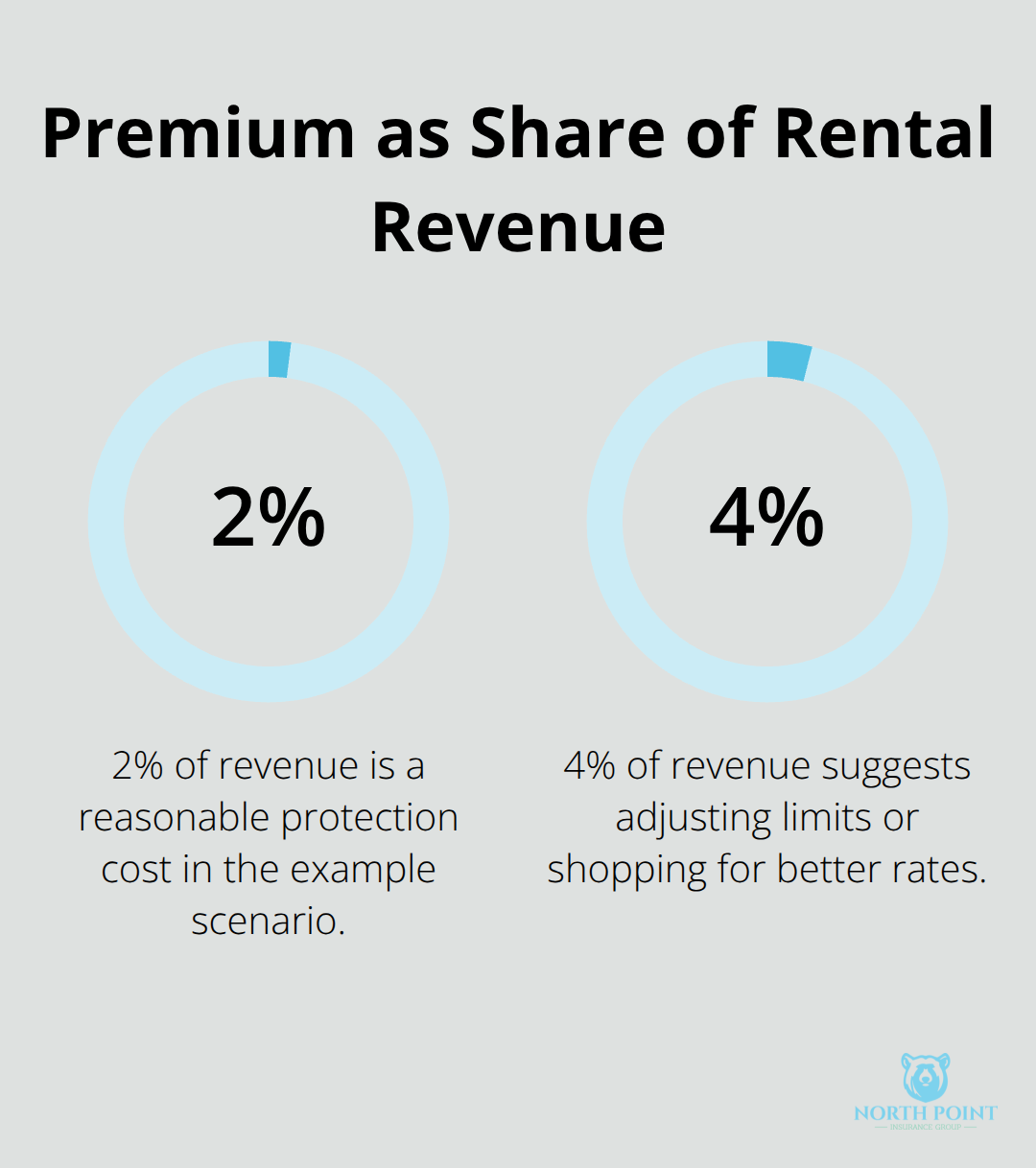
A policy that costs $1,200 annually might exclude onboard equipment damage entirely, while a $1,500 policy includes it-that $300 difference becomes worthless if thieves steal your fishing gear and your coverage doesn’t address it. When comparing quotes, calculate your effective cost per day of coverage (divide the annual premium by 365, then divide that by your daily rental rate). A $1,500 annual premium on a boat that rents 150 days per year costs $10 per rental day. If your guest pays $500, that’s 2% of revenue protecting against $100,000+ liability exposure-that’s reasonable. If the premium hits $3,000 annually, that becomes 4% of revenue, which signals you need to adjust your coverage limits downward or find a carrier willing to match competitor pricing.
Work with an Agent Who Understands Your Operation
Work directly with an agent who asks detailed questions about your operation rather than pushing a single standard policy. An agent should ask about your guest screening process, whether you provide safety briefings, what watersports you permit, and whether guests sign liability waivers. Your agent should identify the gap between what you think you’re covered for and what you actually are-most owners discover their existing homeowner or personal boat policies don’t cover rental activity only after filing a claim and getting denied.
Final Thoughts
Boat insurance for rentals protects your income stream and shields you from liability exposure that standard homeowner or personal boat policies simply won’t cover. A single guest injury claim exceeds $100,000, hull damage runs $300 to $2,000 per incident, and downtime during peak season eliminates the rental revenue you depend on. Proper coverage eliminates these gaps and prevents accidents from consuming your profits or forcing you into personal liability.
Three concrete steps move you forward. Calculate your boat’s actual replacement value by contacting marine dealers for current pricing, then document your rental income patterns over the past two years to determine appropriate loss of rents limits. Request detailed quotes from multiple carriers and compare what their coverage actually includes rather than focusing on premium alone-ask whether liability limits include defense costs, whether hull coverage applies when your boat sits unattached between rentals, and whether loss of rents reimburses your full daily rate.
Work with an agent who understands rental operations and asks about your guest screening process, safety briefings, and liability waivers rather than pushing a standard commercial package. Connect with North Point Insurance Group to find boat insurance for rentals that matches your specific operation and budget. Our agents explain exactly what your policy covers and what it doesn’t, helping you identify coverage gaps before they become expensive claims.
The information provided in this blog is for general informational purposes only and does not constitute legal, financial, or insurance advice. Coverage options, terms, and availability may vary. Please consult with a licensed professional for advice specific to your situation. Artificial intelligence may have been used to generate text and images in some blog articles and may contain inacuracies.

