

Teen Driver Policy Tips: Navigate Insurance Like a Pro
Getting your teen behind the wheel comes with real financial consequences. Insurance premiums for young drivers spike dramatically, and one mistake can cost thousands more.
At North Point Insurance Group, we’ve helped countless parents cut through the confusion. This guide covers the teen driver policy tips you need to make smart decisions and protect your wallet.
Understanding Teen Driver Insurance Costs
Teen drivers trigger an immediate and substantial increase in your auto insurance bill. Car insurance for a 16-year-old on their own policy averages $10,387 a year, while adding that driver to a parent’s policy averages $4,515. The reason is straightforward: teen drivers crash at rates four times higher than drivers aged 20 and older, according to the Insurance Institute for Highway Safety. Insurers price this elevated risk directly into premiums, and your state’s minimum liability coverage requirements set a floor for what you must carry. Most states mandate at least $15,000 in bodily injury liability per person and $30,000 per accident, though many require higher limits.
How Liability Coverage Works
If your teen causes an accident, liability coverage pays for injuries and property damage to the other party, but it won’t cover damage to your vehicle or medical bills for your family. This gap is why many parents add collision and comprehensive coverage when a teen joins the policy, further increasing costs. Your assets determine how much liability protection you actually need. If you own a home or have significant savings, higher limits cost relatively little more but shield your household from catastrophic financial exposure if your teen causes serious injury or property damage.
The Impact of Your Teen’s Driving Record
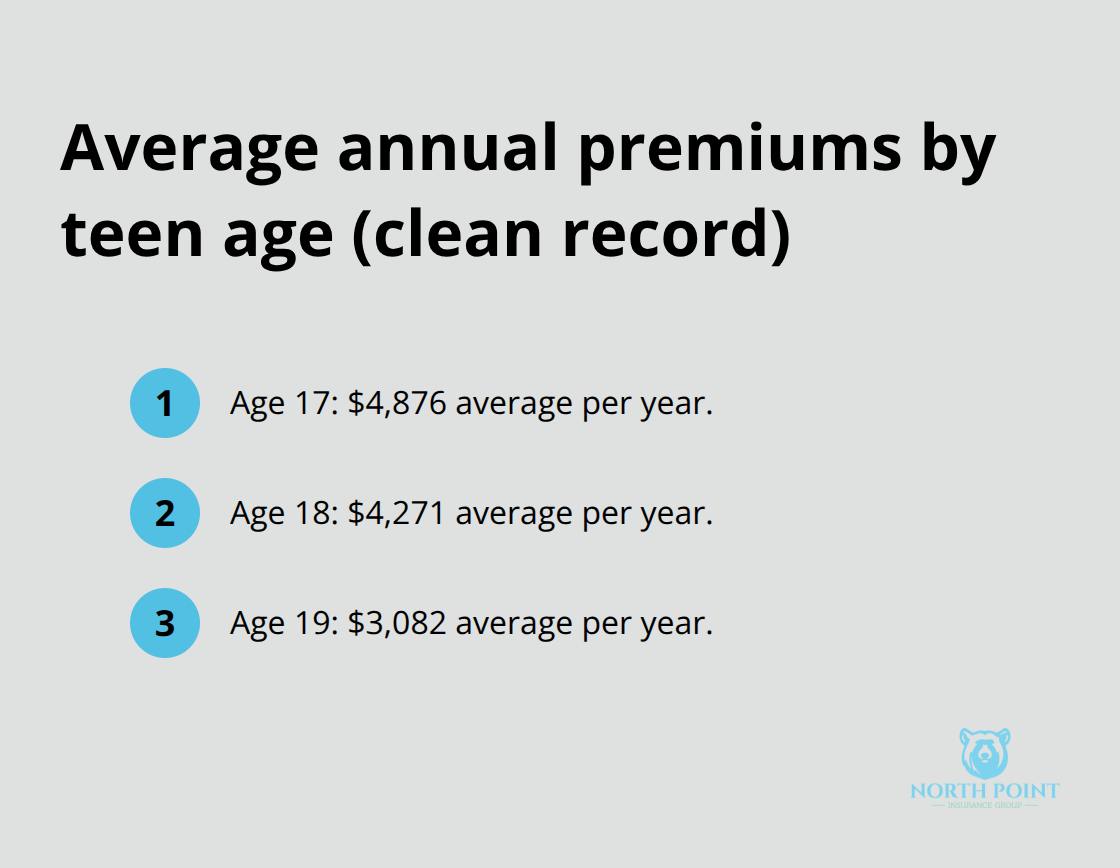
A clean driving record is your strongest tool for controlling costs as your teen ages. Premiums drop noticeably each year once a teen reaches 17, 18, and 19, assuming no violations or accidents accumulate. A 17-year-old averages $4,876 annually, an 18-year-old averages $4,271, and a 19-year-old averages $3,082. However, one at-fault accident or traffic violation can halt these natural declines and trigger surcharges that persist for three to five years.
Even minor infractions like speeding tickets can add 10 to 25 percent to your premium.
This reality makes supervised driving practice and clear conversations about consequences non-negotiable before your teen gets behind the wheel independently. The decisions your teen makes on the road today directly affect what you’ll pay for years to come. With these cost drivers in mind, the next section explores concrete strategies to reduce what you actually pay for teen coverage.
How to Cut Teen Driver Insurance Costs
Bundle Policies for Immediate Savings
Bundling your teen’s auto policy with homeowners or renters coverage delivers immediate savings that compound across your household. Combining auto with homeowners insurance saves over $950 per year, while bundling auto with renters alone saves roughly 5.3%. If you’re currently insuring your teen separately or carrying multiple policies across different carriers, consolidating everything under one insurer typically cuts your bill substantially. The math is straightforward: a parent paying $4,271 annually for an 18-year-old’s coverage can save around $427 through bundling with homeowners. This discount applies automatically once your policies are combined, requiring no extra paperwork or enrollment process beyond updating your agent.
Leverage Good Student and Safety Course Discounts
Good student discounts reward the academic work your teen is already doing and cost you nothing to claim. Insurers offer discounts averaging $283 annually for teens maintaining at least a 3.0 GPA or a B average, depending on the carrier. You must provide proof of grades, typically a report card or transcript, but the documentation process takes minutes. Safety course completion discounts operate similarly, averaging $283 in savings when your teen finishes an approved defensive driving program. These discounts stack with other reductions, so a teen who qualifies for both good student and safety course discounts can accumulate significant savings without additional effort.
Activate Usage-Based Monitoring Programs
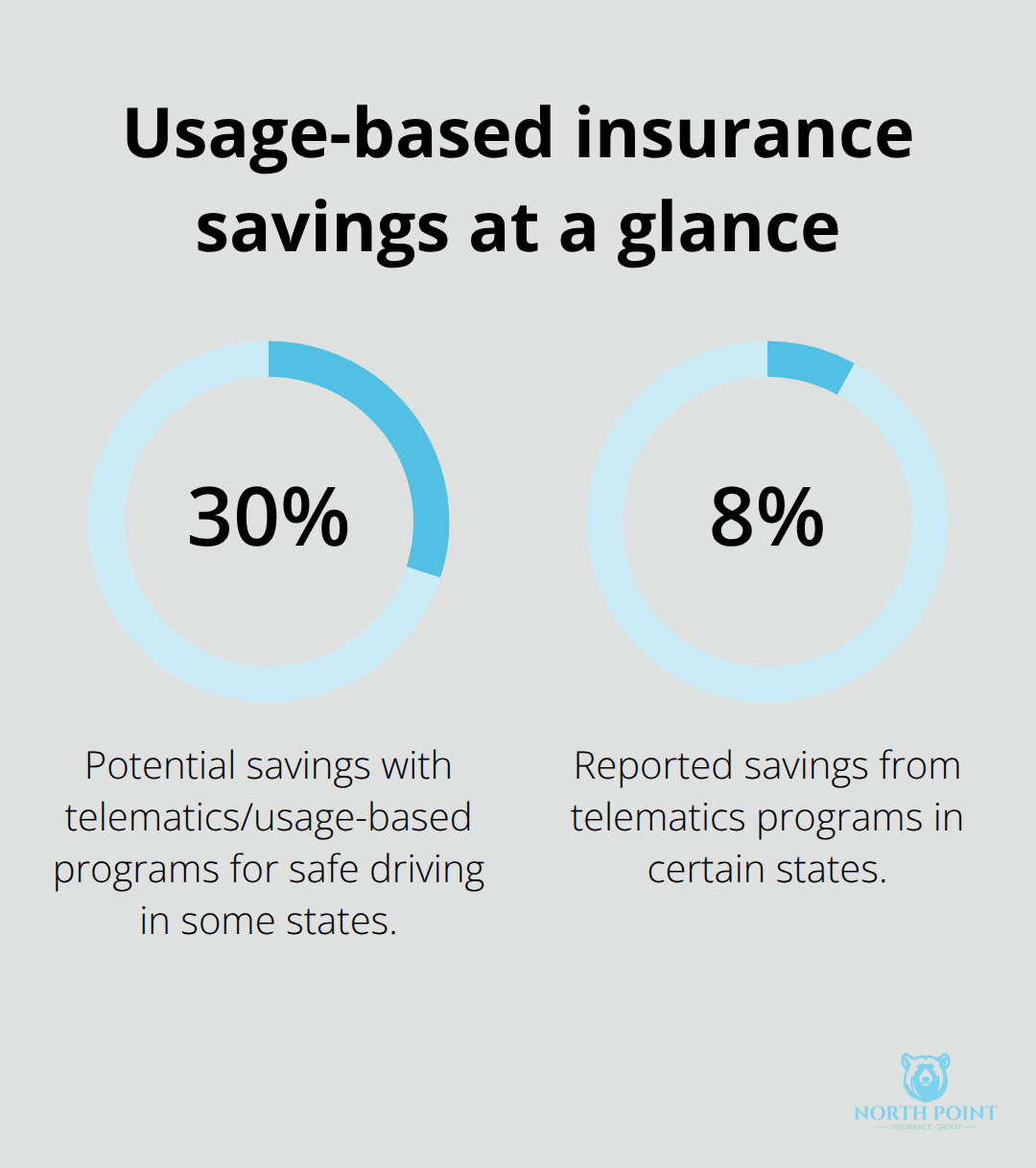
Telematics or usage-based programs like RightTrack offer the most dramatic potential reductions, with savings reaching up to 30% for safe driving habits in some states. These programs install a device or use your phone to monitor acceleration, braking, speeding and nighttime driving, then adjust your rate based on actual behavior rather than age alone. The program provides your teen with real-time feedback on their driving, creating accountability that often improves habits faster than lectures ever could. Connecticut and other states report 8% or higher savings through telematics programs, though availability varies by location.
Maximize Additional Cost-Cutting Strategies
Paying your annual premium upfront rather than in monthly installments saves an additional 4.9%, roughly $210 on a standard teen policy. When you combine these strategies-bundling, good student discount, safety course completion, and telematics monitoring-families routinely reduce teen insurance costs by $1,000 or more annually compared to standard coverage. However, many parents still make critical errors when setting up their teen’s coverage that wipe out these savings and create serious gaps in protection. The next section reveals the mistakes that cost families thousands and how to avoid them.
Common Mistakes Parents Make with Teen Driver Policies
The gap between what parents think they’re doing and what they’re actually doing with teen driver coverage creates financial disasters every single day. Most mistakes fall into three categories, and each one carries a price tag that wipes out the savings strategies from the previous section instantly.
Omitting Your Teen or Misrepresenting the Primary Driver
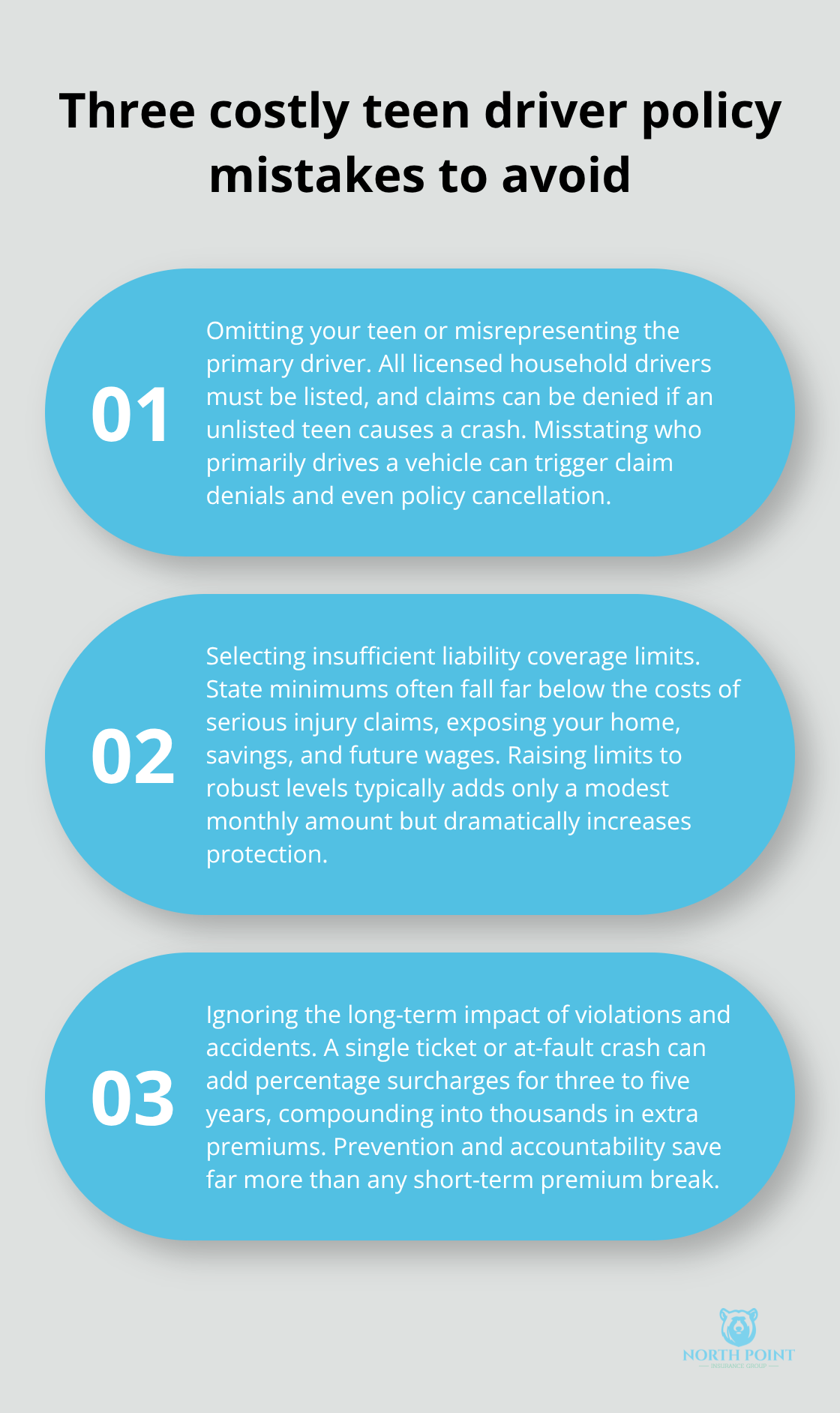
The first and most dangerous mistake is either omitting your teen from the policy altogether or misrepresenting who the primary driver is to lower premiums. State law requires you to list all licensed household drivers on your policy, and most carriers will deny claims if an unlisted driver causes an accident. If your 16-year-old causes a $50,000 crash and isn’t on the policy, you’re personally liable for that entire amount.
Some parents try to hide their teen driver by listing themselves as the primary driver when they barely drive the vehicle, hoping to avoid the premium spike. This strategy backfires catastrophically because insurers investigate claims thoroughly. When they discover the actual driving pattern, they’ll deny coverage and potentially cancel your entire policy, leaving you uninsured retroactively. The financial and legal consequences-including potential lawsuits and state fines-far exceed any premium savings you thought you were gaining.
Selecting Insufficient Liability Coverage Limits
The second critical error is selecting liability limits that match your state’s legal minimum rather than your actual financial exposure. Most states require only $15,000 to $30,000 in liability coverage, which sounds adequate until you calculate what a serious injury lawsuit actually costs. A single catastrophic accident involving permanent disability or death routinely results in settlements exceeding $100,000 to $500,000.
If your teen causes that accident and you’re only carrying state minimums, your homeowner’s assets, savings accounts, and future wages become vulnerable to judgment collection. Try carrying at least sufficient liability coverage limits of $100,000 per person and $300,000 per accident, which typically adds only $15 to $30 monthly compared to state minimums. This modest increase in premium protects your household from catastrophic financial exposure.
Ignoring the Long-Term Impact of Violations and Accidents
The third mistake involves underestimating how violations and accidents affect long-term costs. One at-fault accident or traffic violation doesn’t just increase your premium for the current year-it triggers surcharges that persist for three to five years on your teen’s driving record. A single speeding ticket can add 10 to 25 percent to your annual premium, which compounds across multiple years into thousands of dollars in additional costs.
Many parents focus only on the immediate premium increase and miss the cumulative damage. A 16-year-old who receives a speeding ticket could pay an extra $500 to $1,250 just that year, but if that violation remains on their record through age 20, the total cost could exceed $3,000. This reality makes the conversation about consequences before your teen gets their license non-negotiable-not as parenting theory, but as a financial necessity that protects your household budget.
Final Thoughts
Managing teen driver insurance requires you to list your teen on your policy accurately, carry liability limits that protect your household assets, and understand that violations and accidents create years of premium increases. These teen driver policy tips form the foundation of smart coverage decisions that save money without creating dangerous gaps in protection. Bundling policies, claiming good student discounts, and activating telematics monitoring can reduce your annual costs by $1,000 or more, while paying your premium upfront adds another 4.9% in savings.
Shopping around takes 20 minutes and typically saves hundreds annually, since different insurers price teen coverage differently based on location, vehicle type, and driving record. A quote that seems expensive from one carrier might be substantially cheaper from another, especially when discounts apply to your situation. Getting quotes from multiple carriers shows you exactly how these strategies work for your household rather than relying on generic estimates.
North Point Insurance Group shops 20+ carriers to find coverage that balances cost with protection, and our local agents provide guidance tailored to your situation instead of generic responses. We help families navigate the mistakes covered in this guide and structure policies that actually protect what you’ve built while keeping premiums manageable as your teen gains driving experience.
The information provided in this blog is for general informational purposes only and does not constitute legal, financial, or insurance advice. Coverage options, terms, and availability may vary. Please consult with a licensed professional for advice specific to your situation. Artificial intelligence may have been used to generate text and images in some blog articles and may contain inacuracies.
