

Understanding Auto Insurance: Core Coverages Demystified
Most drivers don’t know what their auto insurance actually covers. This gap in knowledge costs people thousands of dollars when accidents happen.
At North Point Insurance Group, we’ve seen firsthand how understanding auto insurance prevents costly mistakes. This guide breaks down the four core coverages you need to know about.
Liability Coverage: Protection Against Legal Claims
What Liability Coverage Actually Covers
Liability coverage forms the foundation of auto insurance, yet most drivers treat it as a checkbox rather than understanding what it actually does. This coverage pays for injuries and property damage you cause to other people-nothing more. If you hit another car and injure the driver, liability coverage pays their medical bills and lost wages. If you damage someone’s fence or storefront, liability coverage covers the repair costs. The insurance company defends you legally and pays settlements or judgments up to your policy limits. Many states require minimum liability coverage before you can legally drive, but those minimums are dangerously low. Most states allow drivers to carry liability limits as low as $25,000 per person. This means if you cause a significant accident, you personally owe the difference between what your insurance pays and what the injured party’s medical bills actually cost.
Bodily Injury vs. Property Damage Liability
Bodily injury liability and property damage liability work separately on your policy, and this distinction matters financially. Bodily injury liability covers medical expenses, rehabilitation costs, lost income, and pain and suffering for people you injure. Property damage liability covers vehicle repairs, building damage, or other physical property you damage.
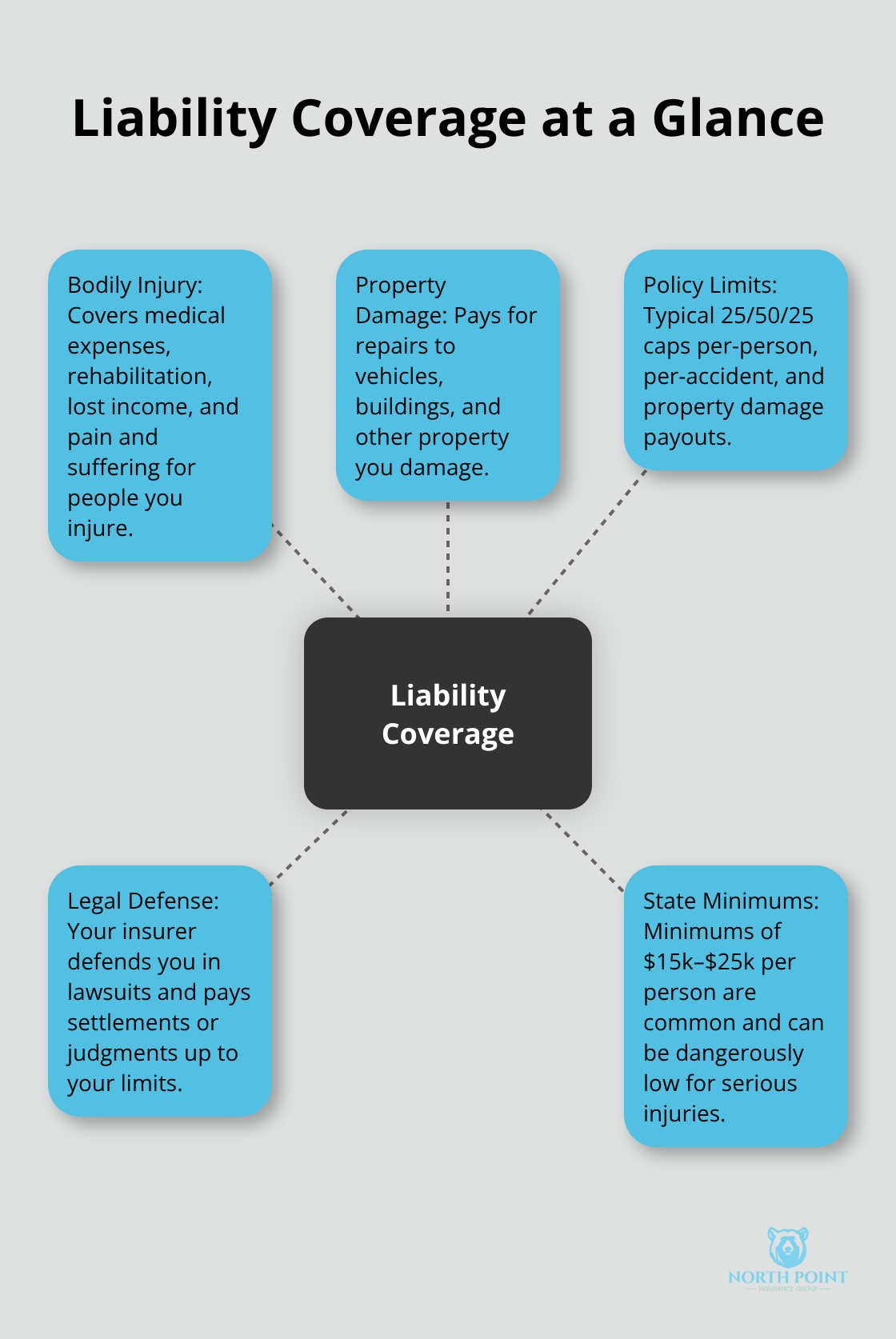
A typical policy might read 25/50/25, meaning $25,000 per person for bodily injury, $50,000 total per accident for bodily injury, and $25,000 for property damage. The problem is straightforward: modern medical care is expensive. If you cause an accident injuring multiple people, your coverage evaporates quickly.
Why State Minimums Fall Short
State minimum liability limits leave you exposed to personal liability. Most states set bodily injury minimums between $15,000 and $25,000 per person-amounts that don’t reflect actual medical costs. A serious injury claim (broken bones, spinal damage, or head trauma) easily exceeds these limits. When your coverage runs out, creditors can pursue your wages, bank accounts, and assets to satisfy the judgment. This risk persists for years after an accident occurs. We recommend carrying at least 100/300/100 limits ($100,000 per person, $300,000 per accident for bodily injury, and $100,000 for property damage). This costs roughly 15 to 25 percent more than state minimums but protects your assets if someone sues you for damages exceeding your coverage limits.
Understanding your liability limits sets the stage for the next layer of protection: coverage that shields your own vehicle from damage.
Collision and Comprehensive Coverage: Protecting Your Vehicle
How Collision and Comprehensive Coverage Differ
Liability coverage protects other people, but collision and comprehensive coverage protect your own vehicle. These two coverages work differently and serve different purposes, yet many drivers misunderstand which situations each one covers. Collision coverage pays to repair or replace your vehicle if you hit another car, a tree, a guardrail, or any other object. Comprehensive coverage pays for damage from events outside your control: theft, weather, wildlife, falling objects, or vandalism. The critical distinction is control-if you cause the damage through an accident, collision applies; if something happens to your vehicle that you didn’t cause, comprehensive applies.
When You Actually Need Both Coverages
Most lenders and lease companies require both coverages, but if you own your vehicle outright, many drivers skip comprehensive to save money. This is a mistake. According to the National Highway Traffic Safety Administration, weather-related crashes cause roughly 21 percent of all vehicle accidents, totaling over 418,000 accidents annually.
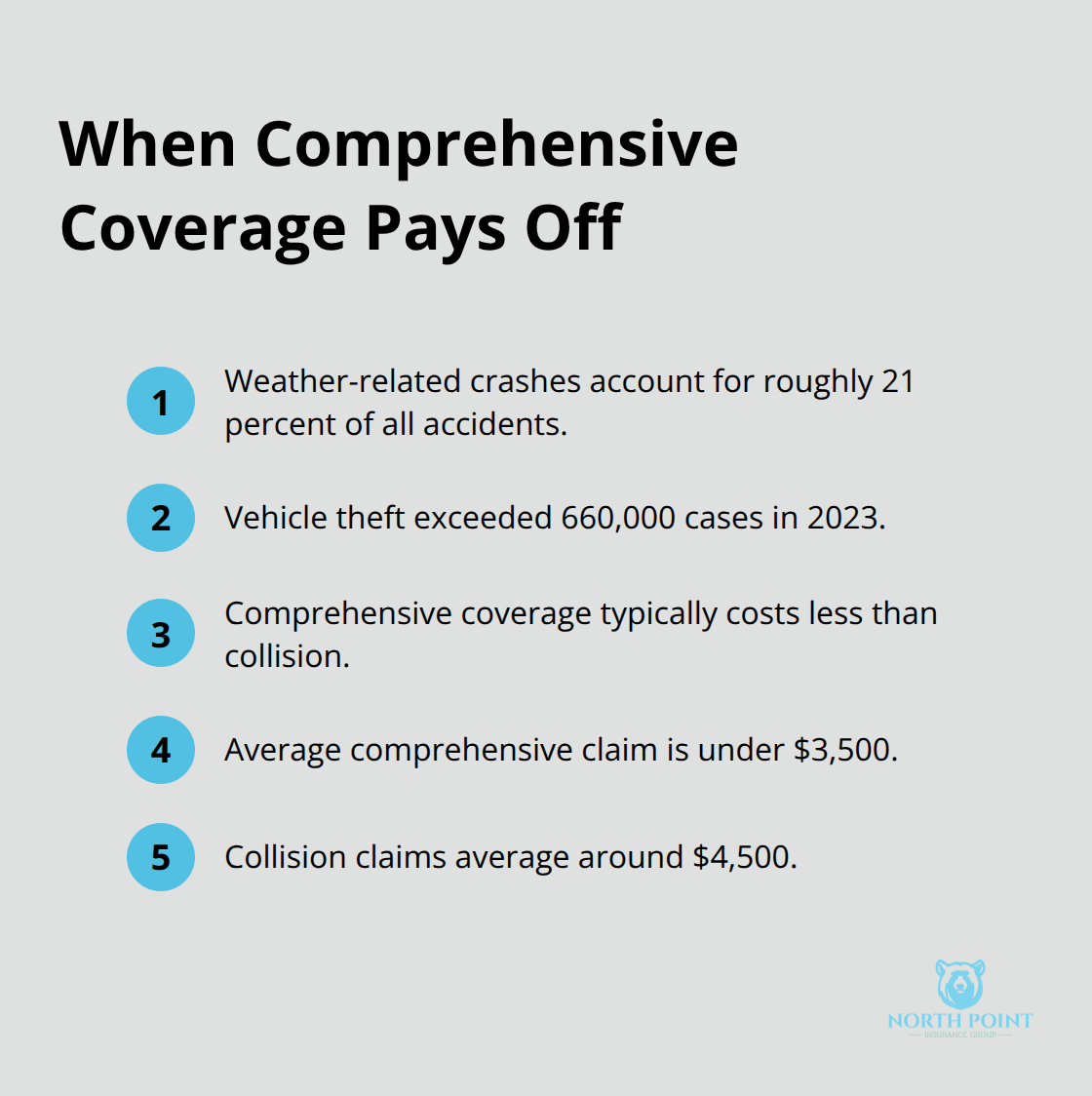
That doesn’t count theft, which the FBI reported at over 660,000 stolen vehicles in 2023. Comprehensive coverage costs significantly less than collision coverage because insurers pay out less frequently. The average comprehensive claim runs under $3,500, while collision claims average around $4,500. If you live in an area with severe weather, hail, or high theft rates, comprehensive coverage becomes economically rational rather than optional.
Understanding Deductibles and Premium Impact
Deductibles determine how much you pay out of pocket before your insurance pays anything, and this choice directly affects your premium costs. A $500 deductible is standard, but you can choose $250, $1,000, or higher depending on your financial situation. Raising your deductible from $500 to $1,000 typically reduces your collision premium by 15 to 30 percent annually. The math is straightforward: if you rarely file claims, a higher deductible saves you thousands over years of ownership. However, if you file a claim, you pay that higher amount immediately.
Matching Your Deductible to Your Situation
Try selecting a deductible you can actually afford to pay if an accident happens. Choosing a $2,500 deductible to save $30 per month creates financial disaster if you need repairs. Track your driving history honestly. If you’ve had two accidents in five years, your claims frequency suggests a lower deductible makes sense despite higher premiums. If you’ve driven 20 years without a claim, increasing your deductible reduces unnecessary spending. The deductible applies separately to collision and comprehensive, so you can set different amounts for each. Many drivers set comprehensive lower (because claims are rarer) and collision higher (because they’re more common), or vice versa based on their specific risk profile.
Moving Beyond Vehicle Protection
Your vehicle is protected, but what happens when the other driver lacks adequate insurance? That’s where uninsured and underinsured motorist coverage steps in-a layer many drivers overlook despite its real-world importance.
Uninsured and Underinsured Motorist Coverage: Closing the Gap
What Happens When the Other Driver Is Uninsured
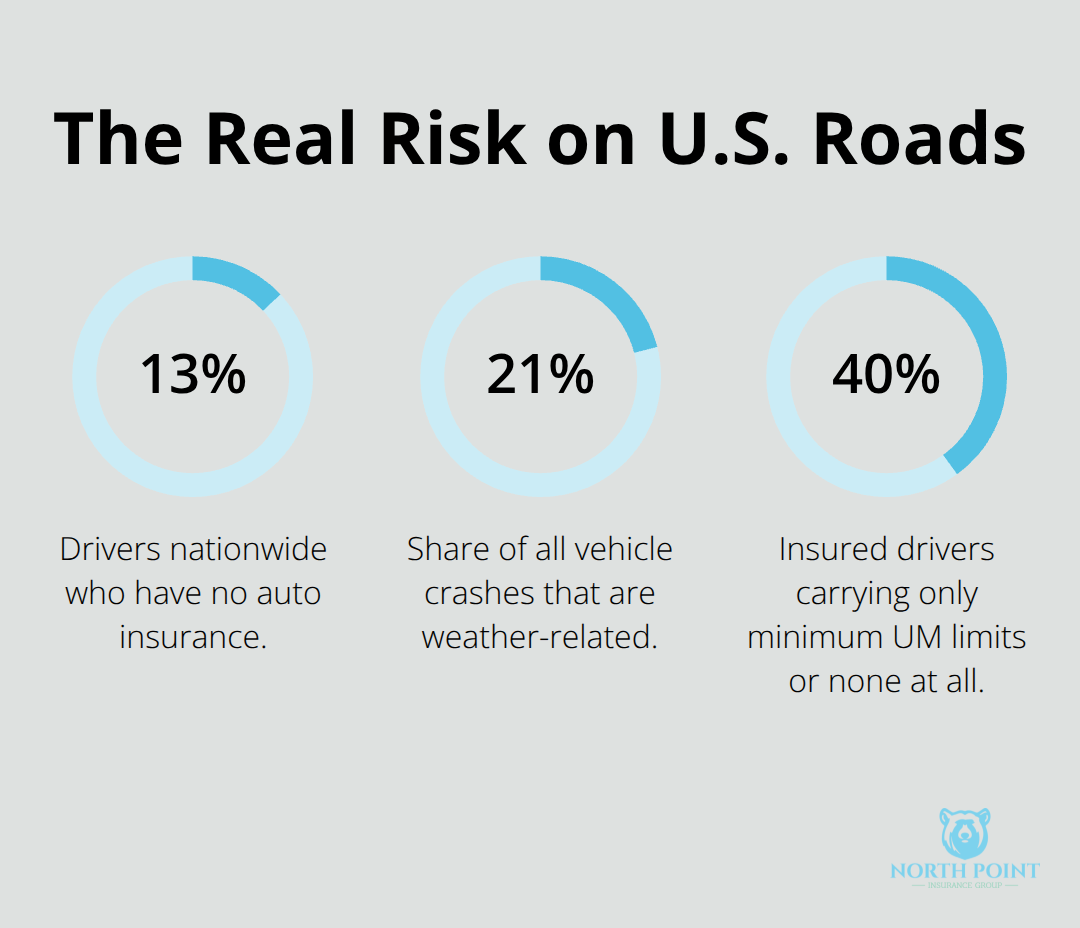
Uninsured and underinsured motorist coverage protects you when the other driver either has no insurance or carries limits too low to cover your damages. This coverage addresses a widespread, measurable problem rather than an edge case. The Insurance Information Institute reports that roughly 13 percent of drivers nationwide operate without any auto insurance. In states with higher uninsured rates like Florida and Mississippi, that number climbs above 20 percent.
If an uninsured driver hits you, your collision and comprehensive coverage pay for vehicle damage, but you absorb medical expenses and lost wages unless you carry uninsured motorist coverage. This coverage also applies when a hit-and-run driver strikes you, since you cannot recover from someone who fled the scene. Underinsured motorist coverage handles the scenario where the at-fault driver carries insurance but their limits fall short. If someone with only $25,000 in bodily injury coverage hits you and your medical bills total $80,000, your underinsured motorist coverage bridges that gap up to your policy limits.
Most states allow you to purchase uninsured motorist limits matching your liability limits, though some states cap these amounts. Setting your uninsured motorist bodily injury coverage at 100/300 ($100,000 per person, $300,000 per accident) costs roughly 10 to 15 percent more than minimum coverage but protects you against real financial exposure from other drivers’ inadequate insurance.
How These Coverages Work Together
The mechanics of how uninsured and underinsured motorist coverage work together create important distinctions affecting claim outcomes. When an uninsured driver injures you, your uninsured motorist coverage pays your medical expenses, lost wages, and pain and suffering up to your policy limit. Your collision coverage simultaneously repairs your vehicle. These coverages do not duplicate benefits-they serve separate functions.
Underinsured motorist coverage activates only after the at-fault driver’s liability coverage is exhausted. Their insurance pays first up to their limits, then your underinsured motorist coverage pays the remainder up to your own limits. This layered approach prevents you from collecting twice for the same injury while still protecting your assets.
Why Drivers Overlook This Protection
Many drivers skip or minimize this coverage, assuming they’ll never encounter an uninsured driver. This reflects poor risk assessment. Your own driving behavior cannot control whether other drivers carry insurance. You cannot predict hit-and-run accidents. You cannot assess whether a driver’s stated coverage limits match their actual policy.
The financial risk of forgoing this coverage significantly outweighs the modest premium savings. Yet roughly 40 percent of insured drivers carry only minimum uninsured motorist limits or none at all. This gap leaves them financially vulnerable to circumstances entirely outside their control.
Final Thoughts
Understanding auto insurance means recognizing that liability, collision, comprehensive, and uninsured motorist coverages work together to protect both you and your assets. Each layer serves a distinct purpose, and skipping any of them creates financial exposure you may not realize until an accident occurs. Your vehicle’s value, your financial reserves, and your risk tolerance should all factor into your coverage decisions.
State minimum liability limits leave you personally responsible for damages exceeding your coverage, so carrying 100/300/100 limits costs only slightly more than minimum coverage but protects your wages and assets if someone sues you. Uninsured motorist coverage addresses a measurable risk: roughly 13 percent of drivers operate without insurance, and that percentage climbs above 20 percent in some states. This coverage costs little relative to the financial protection it provides.
The team at North Point Insurance Group can help you navigate these decisions and find coverage that matches your needs and budget. Our agents provide personalized guidance without the call-center experience, helping you understand exactly what you’re buying and why.
The information provided in this blog is for general informational purposes only and does not constitute legal, financial, or insurance advice. Coverage options, terms, and availability may vary. Please consult with a licensed professional for advice specific to your situation. Artificial intelligence may have been used to generate text and images in some blog articles and may contain inacuracies.

