

Automobile Coverage Explained: What You Need to Know
Most drivers buy auto insurance because the law requires it. But understanding what your policy actually covers-and what it doesn’t-makes a real difference when you need it most.
At North Point Insurance Group, we’ve helped thousands of drivers navigate their options. This guide breaks down automobile coverage explained in straightforward terms, so you can make decisions that fit your situation.
What Each Coverage Type Actually Covers
Liability Coverage Protects Others, Not You
Liability coverage is mandatory in nearly every state, and for good reason. It pays for injuries and property damage you cause to others in an accident. Texas requires a minimum of 30/60/25, meaning $30,000 per person, $60,000 per accident for bodily injury, and $15,000 for property damage. California sets minimums at 30/60/15. These minimums exist to protect other people, not you.
The problem is that one serious accident can easily exceed these limits. If you cause $100,000 in damage and carry only $30,000 in liability coverage, you’re personally responsible for the remaining $70,000. That’s why carrying higher limits than your state minimum makes financial sense, especially if you own assets worth protecting.
Collision and Comprehensive: Two Different Protections
Collision and comprehensive coverage work differently because they protect your own vehicle rather than the other person’s. Collision pays for damage to your car from a crash, regardless of who caused it, subject to your deductible. Comprehensive covers non-collision damage like theft, vandalism, weather, and animal collisions. Both are typically paid based on your car’s actual cash value, meaning depreciation applies.
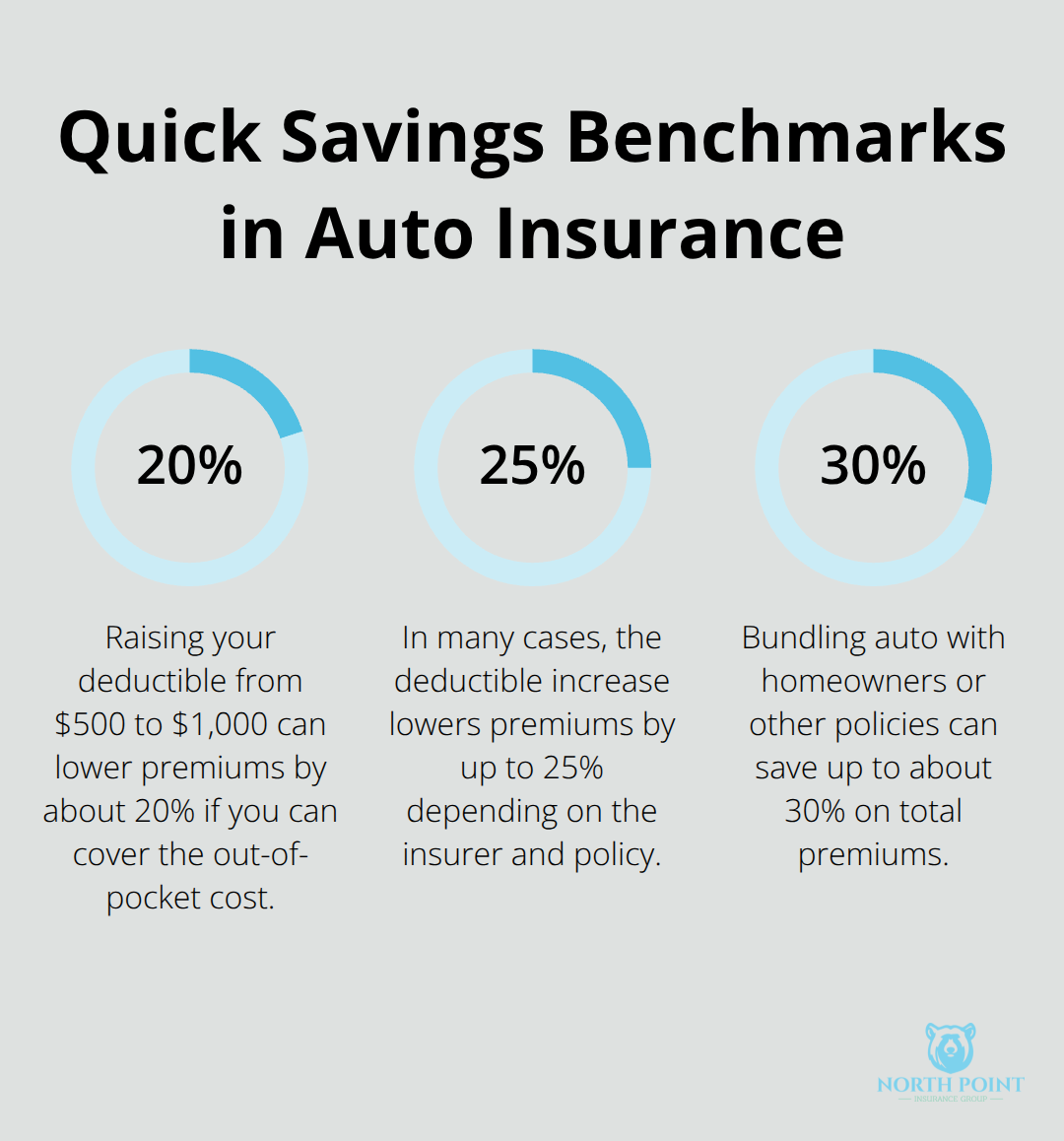
If your 2018 sedan is worth $12,000 and someone steals it, you receive $12,000 minus your deductible. If your lender financed the car and you still owe $14,000, you’re responsible for the $2,000 gap unless you purchased gap insurance. According to Consumer Reports, raising your deductible from $500 to $1,000 lowers your premium by roughly 20 to 25 percent, but you must be prepared to pay that amount out of pocket after a claim.
Uninsured and Underinsured Motorist Coverage Fills Critical Gaps
Uninsured and underinsured motorist coverage (UM/UIM) protects you when the other driver has little or no insurance, or when their coverage limits don’t match your losses. This coverage is optional in most states but mandatory in no-fault states like Texas and California. In Texas, all policies include Personal Injury Protection (PIP), which covers medical costs and lost wages for you and your passengers regardless of fault.
If you’re hit by an uninsured driver and have UM/UIM coverage matching your liability limits, your own insurance steps in to cover your injuries and damages. Without it, you’re chasing an uninsured driver for compensation they likely cannot pay. The Insurance Information Institute advises matching your UM/UIM limits to your liability limits because gaps between coverages create exposure.
Many drivers overlook these three coverage types because they focus only on what the law requires. State minimums reflect legal requirements, not adequate protection. Your actual needs depend on your financial situation, vehicle value, and what you can afford to pay out of pocket after a claim. Understanding how each type works positions you to make informed decisions about which coverages fit your situation-and that’s where your personal circumstances come into play.
What Drives Your Insurance Premium
Your Driving History Sets the Foundation
Your driving history stands as the single most predictive factor in how much you pay for auto insurance. One at-fault accident or traffic violation increases your premium significantly, and multiple violations compound the problem. If you’re 51 percent or more at fault in an accident, your insurer will likely surcharge your policy at renewal. This threshold matters because fault determinations below 51 percent may help you avoid a surcharge entirely. Your claims history also affects rates through CLUE reports, which track previous claims you’ve filed. Insurers pull this data when they underwrite your policy, so even claims you thought were minor can resurface when you shop for new coverage.
Vehicle Type and Safety Features Impact Your Rate
The vehicle you drive influences your premium as much as how you drive it. Luxury cars, sports cars, and models with high theft risk cost significantly more to insure because repair costs and theft likelihood are higher. Conversely, vehicles with strong safety ratings and anti-theft devices qualify for lower premiums. Your vehicle’s age and condition matter too-older cars with lower market values typically cost less to insure than new models, though comprehensive and collision coverage become less economical on vehicles worth very little.
Location and Usage Patterns Create Rate Variations
Where you live matters just as much as what you drive. High-theft ZIP codes and areas with elevated medical costs or litigation expenses carry higher premiums. How you use your vehicle also factors into the equation. If you use your vehicle for business or ridesharing, you’ll need higher coverage or a separate policy because standard personal auto policies exclude commercial use.
Credit Score and Deductible Choices Affect Your Bottom Line
Your credit-based insurance score influences rates in many states, meaning your payment history and length of credit history can raise or lower your premium. Raising your deductible from $500 to $1,000 lowers premiums by roughly 20 to 25 percent, but only if you can realistically pay that amount after a claim. The relationship between deductible and premium works in your favor when you have emergency savings to cover the out-of-pocket cost. Bundling auto with homeowners or other policies can save up to about 30 percent on total premiums, depending on the insurer, making multi-policy discounts one of the most accessible ways to reduce your overall costs.
Shopping Around Reveals Your True Options
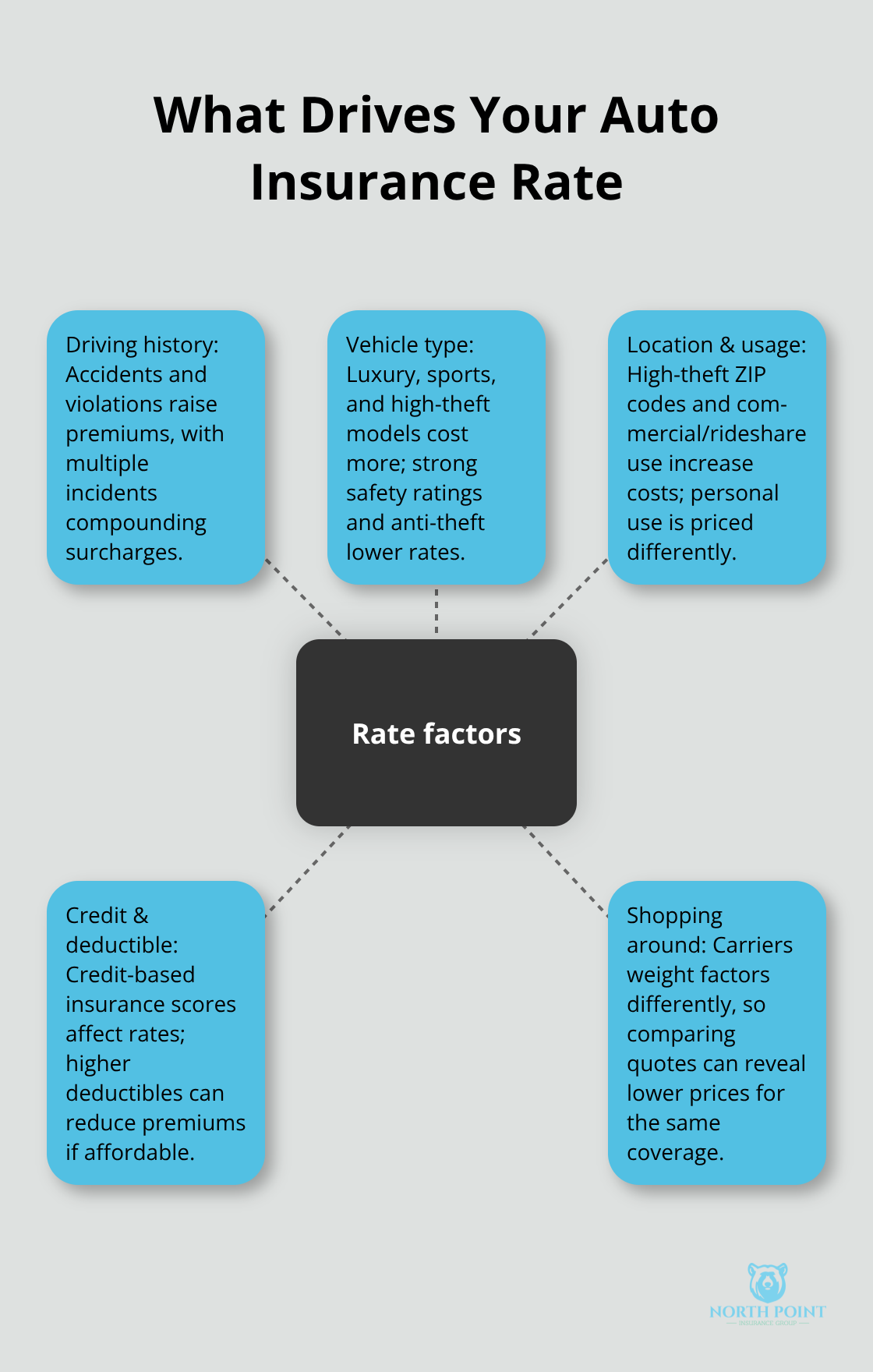
These rate factors vary significantly across insurers, which is why comparing quotes from multiple carriers matters. One insurer may weight your driving history heavily while another emphasizes vehicle type or location. Your age, marital status, and whether you’ve had prior coverage all influence how different companies price your risk. The factors that drive your premium at one carrier may produce a completely different result at another, so the premium you pay today isn’t necessarily what you’ll pay elsewhere. Understanding what moves your rate helps you identify which factors you can control (like raising your deductible or taking a defensive driving course) and which ones you cannot (like your age or where you live). This knowledge positions you to evaluate coverage options that match both your budget and your actual protection needs.
Matching Coverage to Your Actual Financial Exposure
Calculate Your Liability Exposure Based on Your Assets
Start by calculating what you could realistically afford to lose in an accident. If you own a home, have savings, or carry significant assets, your liability exposure is substantial. A single at-fault accident that injures multiple people or damages property can produce medical bills, lost wages, and property damage claims that dwarf your state’s minimum requirements. Texas minimum liability of 30/60/25 sounds adequate until someone files a $150,000 claim for spinal injuries from a crash you caused. At that point, the gap between your coverage limit and your actual liability becomes your personal debt.
Higher liability limits cost surprisingly little extra. Increasing from 30/60/25 to 100/300/100 typically adds only $100 to $200 annually depending on your driving record and location, according to Consumer Reports data. If you own meaningful assets, carrying 100/300/100 or even 250/500/250 limits is the only rational decision because the premium difference is negligible compared to the protection you receive.
Evaluate Collision and Comprehensive Based on Vehicle Value
Collision and comprehensive coverage decisions hinge on your vehicle’s actual cash value and whether a lender requires it. If you finance or lease your car, your lender mandates collision and comprehensive coverage, so this choice is made for you. If you own your vehicle outright, the math becomes clearer.
A 2015 sedan worth $8,000 might cost $600 annually in collision coverage with a $500 deductible. That same coverage on a 2024 model worth $32,000 might cost $1,200 annually. Once your vehicle drops below $5,000 in value, the annual collision premium often exceeds what you would receive in a claim after depreciation is applied. At that threshold, dropping collision makes financial sense if you have emergency savings to replace the vehicle.
Comprehensive operates differently because theft and weather damage happen without warning. Comprehensive premiums stay relatively low even on older vehicles, so keeping it makes sense unless your car is genuinely worthless. The low cost of comprehensive protection relative to its value justifies maintaining it across most vehicle ages and conditions.
Match Uninsured Motorist Coverage to Your Liability Limits
Uninsured motorist coverage should match your liability limits because the protection fills the gap when someone else causes your injury but has no insurance. If you carry 100/300/100 liability, matching those limits with uninsured motorist coverage costs little extra but protects you completely. Too many drivers carry minimal UM/UIM limits while carrying high liability limits-a backwards approach that leaves them exposed to uninsured drivers while protecting others generously.
The logic is straightforward: you protect yourself with the same limits you use to protect others. This alignment ensures no coverage gaps exist between what you carry for liability and what you carry for uninsured motorist protection. When an uninsured driver causes an accident, your UM/UIM coverage steps in to cover your injuries and damages up to your policy limits, preventing you from pursuing an uninsured driver who likely cannot pay.
Final Thoughts
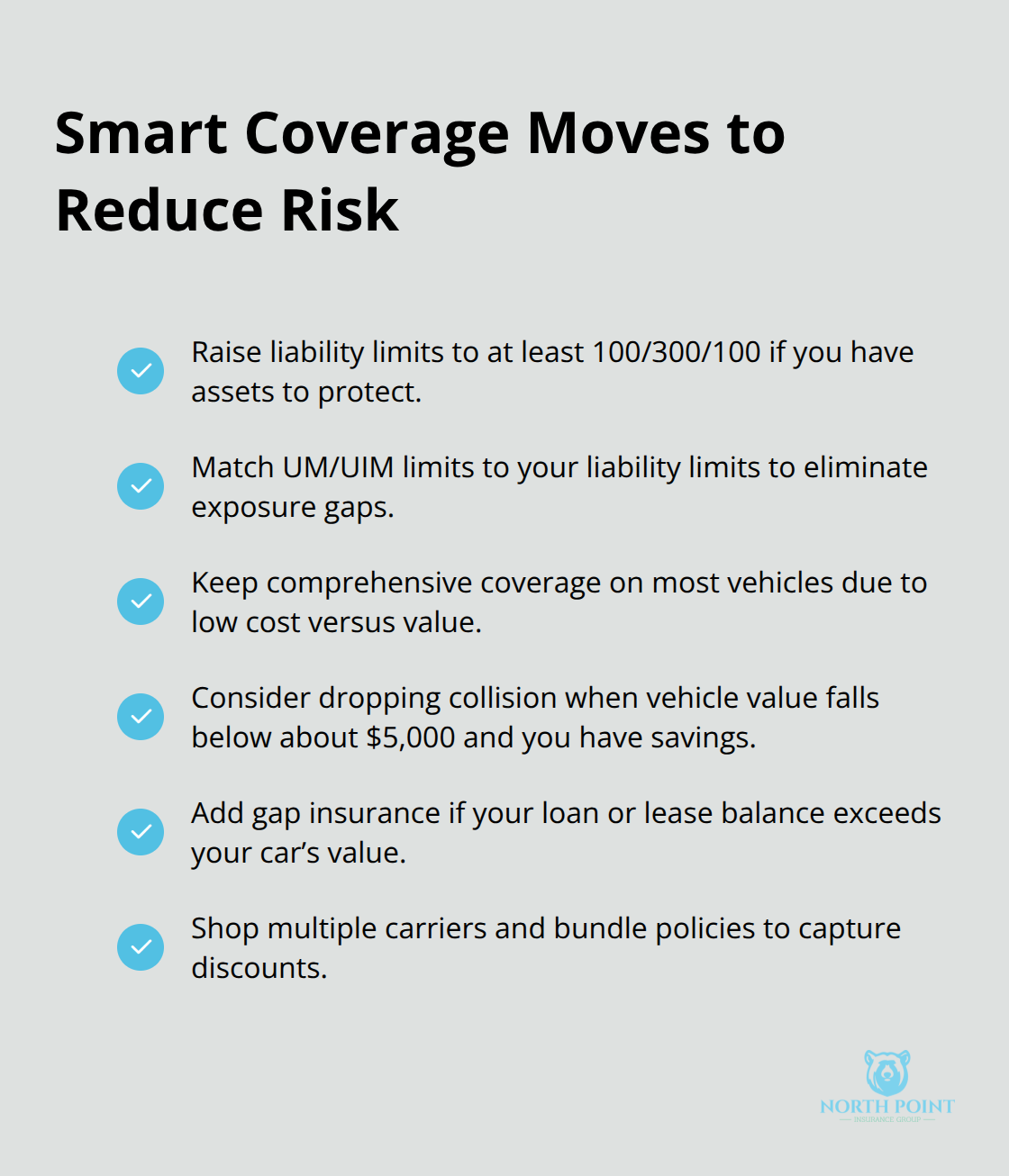
Automobile coverage explained boils down to three core principles: understanding what each coverage type protects, recognizing which factors drive your premium, and matching your protection to your actual financial exposure. Most drivers carry only what the law requires, leaving themselves vulnerable to gaps that cost thousands after an accident. State minimums exist to protect other people, not you-your liability limits should reflect your assets, your collision and comprehensive decisions should align with your vehicle’s value, and your uninsured motorist coverage should match your liability limits to eliminate exposure gaps.
The coverage decisions you make today directly impact what happens when an accident occurs. A driver with $30,000 in liability coverage and $8,000 in assets faces personal bankruptcy after a serious accident, while that same driver with $100,300 in liability coverage pays only slightly more in premiums but eliminates financial catastrophe. Higher limits cost far less than the protection they provide, and reviewing your declarations page takes less than an hour but often reveals outdated coverage, missed discounts, or limits that no longer match your situation.
Shopping with multiple carriers matters because rate variations are substantial-one insurer may quote $1,200 annually while another quotes $950 for identical coverage, and drivers who switched insurers saved a median of $461 per year according to Consumer Reports data. Contact North Point Insurance Group to speak with a local agent who shops multiple carriers and helps you build protection that actually matches your needs and budget.
The information provided in this blog is for general informational purposes only and does not constitute legal, financial, or insurance advice. Coverage options, terms, and availability may vary. Please consult with a licensed professional for advice specific to your situation. Artificial intelligence may have been used to generate text and images in some blog articles and may contain inacuracies.

