
Boat Insurance Claims Guide: Filing with Confidence
Boat damage happens fast, and filing a claim shouldn’t be complicated. We at North Point Insurance Group know that the stress of an accident or theft can make the process feel overwhelming.
This boat insurance claims guide walks you through each step, from documenting damage to working with your adjuster. You’ll learn what to do right now to protect your claim and get back on the water sooner.
What Boat Insurance Actually Covers
Collision and Impact Damage
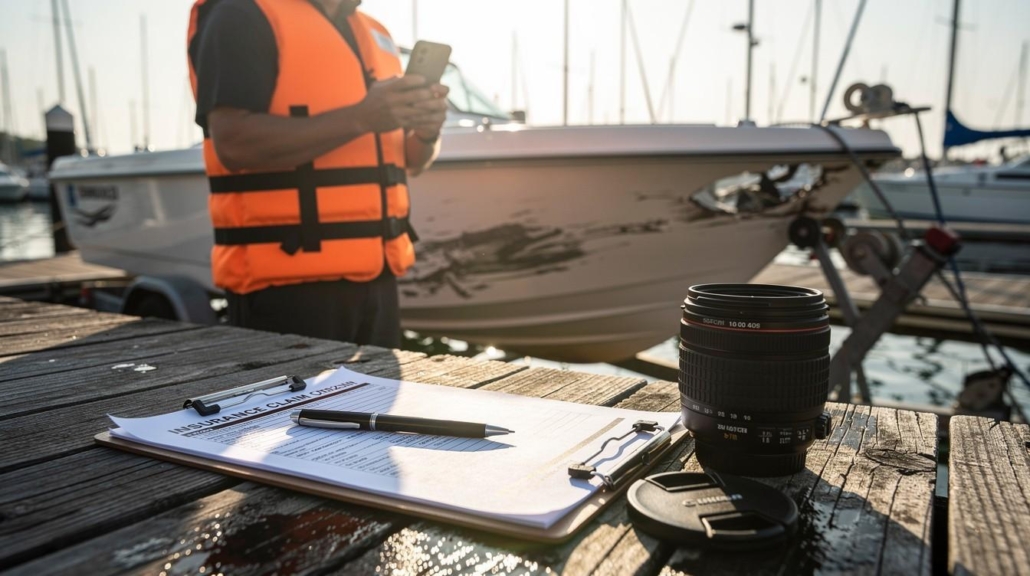
Collision coverage pays for damage from hitting another boat, a dock, or running aground, minus your deductible. A 25-foot boat collision can easily exceed $15,000 in hull damage alone. Impact damage ranks as one of the most common reasons boat owners file claims. When you hit something or something hits you, the adjuster inspects the damage, obtains repair estimates, and compares the repair cost against your policy limits. Have your boat title and proof of ownership ready to speed up this process. Your deductible gets subtracted from the payment, so understanding that amount beforehand prevents surprises.
Theft and Vandalism
Theft and vandalism happen more than most boat owners expect. Watercraft thefts dropped from 4,644 in 2021 to 4,461 in 2022, with Florida consistently ranking in the top three states. Vandalism-slashed canvas, damaged electronics, stolen outboard motors-adds another layer of risk, especially in busy marinas. Comprehensive coverage protects against both. When you file a theft claim, take photos from multiple angles before any cleanup or movement, record the date, time, location, and weather conditions, and report the claim promptly to your insurance agent. An insurance adjuster reviews your documentation and compares it against your policy and repair estimates.
Weather-Related Damage
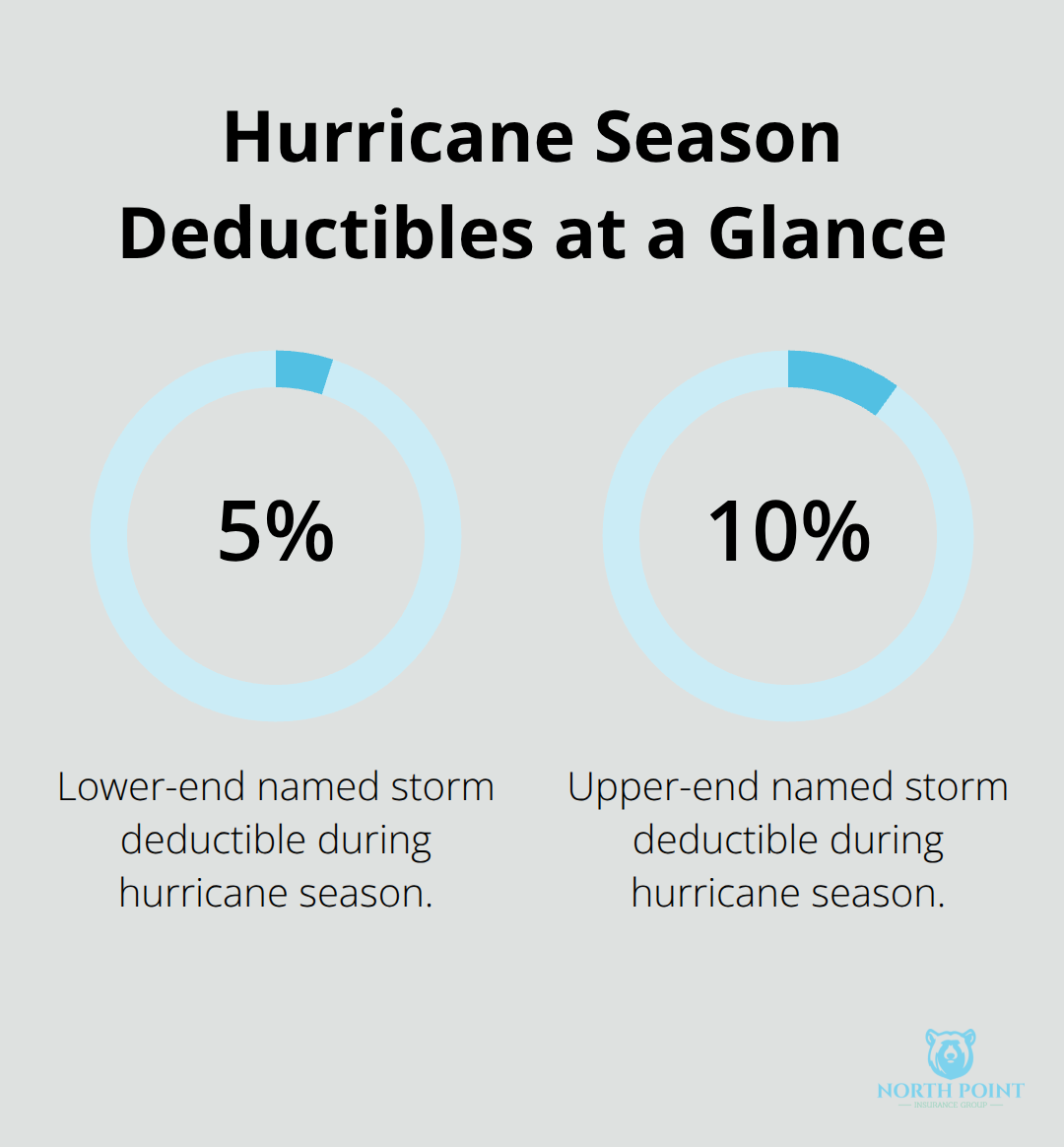
Weather-related damage from hurricanes, named storms, and severe wind causes the highest claim volumes in coastal areas. In Florida, storm damage consistently ranks as the leading cause of boat insurance claims. Many marine policies apply higher deductibles during hurricane season or for named storms-sometimes 5 to 10 percent of your boat’s value instead of a flat amount (a $100,000 boat could have a $5,000 deductible during storm season rather than the standard $500). Wind damage from flying debris, water intrusion, and sinking from storm surge all trigger claims.
Grounding due to tides or unexpected shallow water requires specialized rescue and recovery, which insurance covers under hull protection. Lightning strikes damage navigation systems and electronics-replacement costs for modern marine GPS and radar units run $2,000 to $8,000.
Know Your Policy Details
Understanding what your policy covers and what it excludes prevents denial surprises. Read your policy carefully, noting coverage types, limits, and exclusions. Different watercraft types require different policies, so confirm your policy matches your vessel (a sailboat policy differs from a jet ski policy). Annual policy reviews catch changes in coverage needs when you add equipment or upgrades to your boat. The next step in protecting your claim starts with how you respond immediately after damage occurs.
Filing Your Claim Step by Step
Protect Your Claim in the First Hours
The first hours after damage occurs determine how smoothly your claim progresses. Stop all activity that could worsen the damage-do not move the boat, do not start cleanup, and do not discard any damaged parts. Take clear photos and videos from multiple angles covering the boat, motor, trailer, dock area, and surrounding equipment. Capture wide shots showing the overall scene and close-ups of specific damage points.
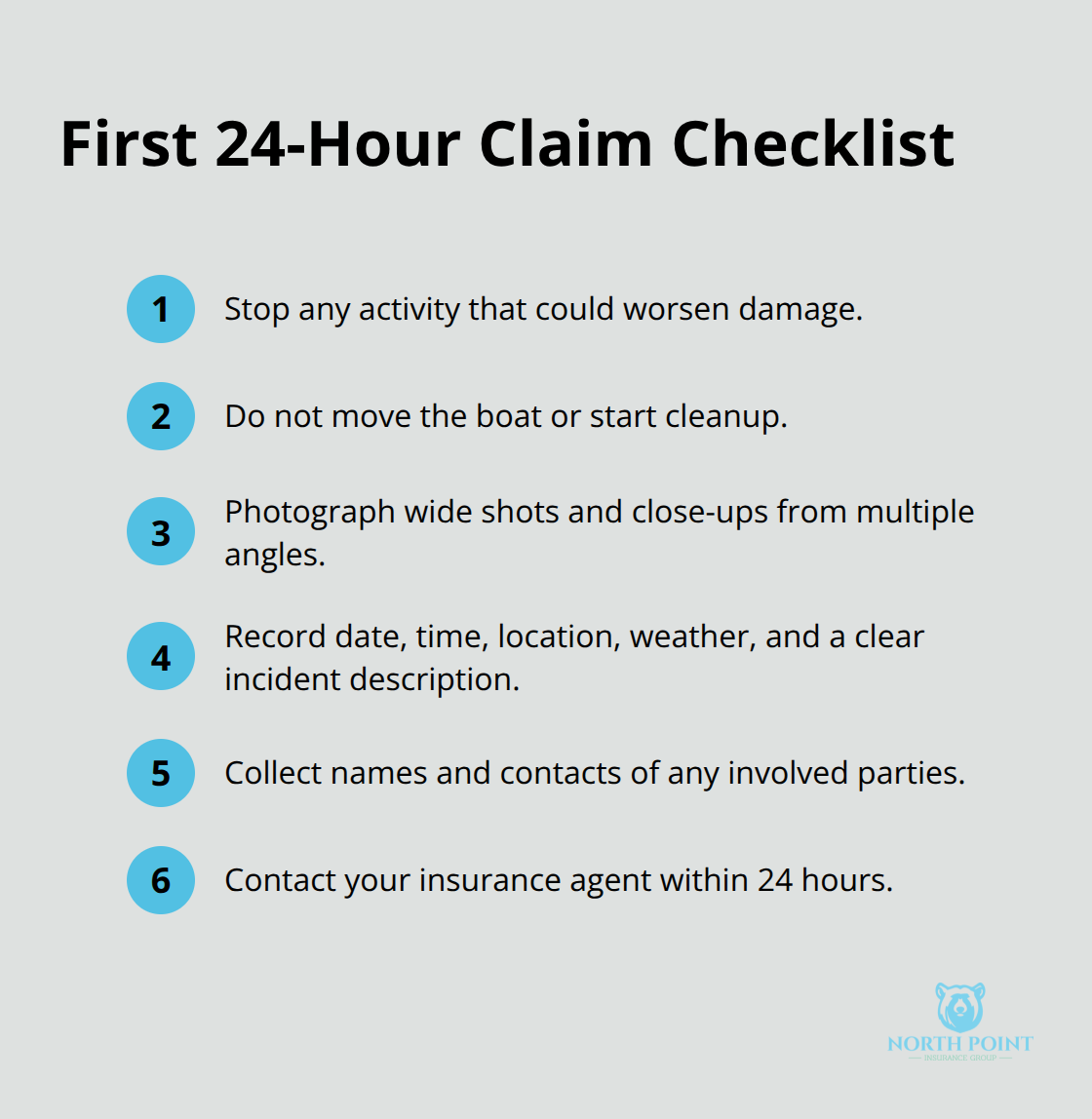
Record the date, time, location, weather conditions, and a straightforward description of what happened immediately, while details remain fresh. If other boats or parties were involved, note their names and contact information. Contact your insurance agent the same day or within 24 hours at the latest. Delays in reporting can complicate the claims process and may even result in denial if your policy specifies a reporting deadline.
Report and Prepare Documentation
Your agent will explain what information you need to provide and walk you through next steps before repairs begin. Gather your boat title, proof of ownership, registration, and maintenance records before the adjuster arrives. Have repair estimates ready if your insurer requests them before the inspection-some carriers require pre-approval before work starts, which affects your timeline if obtained late. Prepare receipts for any equipment on board, storage details, and marina information.
An insurance adjuster will contact you to schedule an inspection and may ask follow-up questions about the incident. Be honest and factual in all communications; inconsistencies can delay payment or trigger denial. Cooperate fully by providing access to the boat, answering questions clearly, and submitting requested documents promptly.
Work Effectively with Your Adjuster
The adjuster compares your claim details against your policy coverage and repair estimates to determine what’s covered. You can choose any repair shop for the work, though some insurers have preferred networks. Ask your adjuster about your deductible and confirm whether you need pre-approval before repairs begin. Keep a detailed log of every conversation-note the adjuster’s name, date, time, and what was discussed.
Save all correspondence, call notes, and emails in one organized file (this documentation protects you if disputes arise and speeds up the process if additional information is needed). Your adjuster will guide you through repair options and explain the coverage decision once the review concludes. Understanding this decision and asking clarifying questions about covered amounts and deductible application sets the stage for smooth repairs and payment processing.
Tips for a Successful Claim Resolution
Maintain Detailed Records Before Damage Strikes
Most boat owners think the claims process ends when the adjuster leaves, but that’s where many claims stall or get denied. The difference between a resolved claim and a disputed one comes down to three practices you control entirely: maintaining detailed records before damage happens, knowing exactly what your policy covers, and responding to your adjuster faster than they expect.
Start now with preventive documentation. A maintenance log for your boat records every part replacement, repair, and service performed, with dates and costs. This log directly counters claim denials based on alleged neglect or lack of upkeep. When an adjuster reviews your claim, a documented maintenance history proves you maintained the vessel properly and strengthens your position significantly. Many insurers scrutinize maintenance records closely, and proactive, documented upkeep improves approval chances substantially.
Organize Your Critical Information
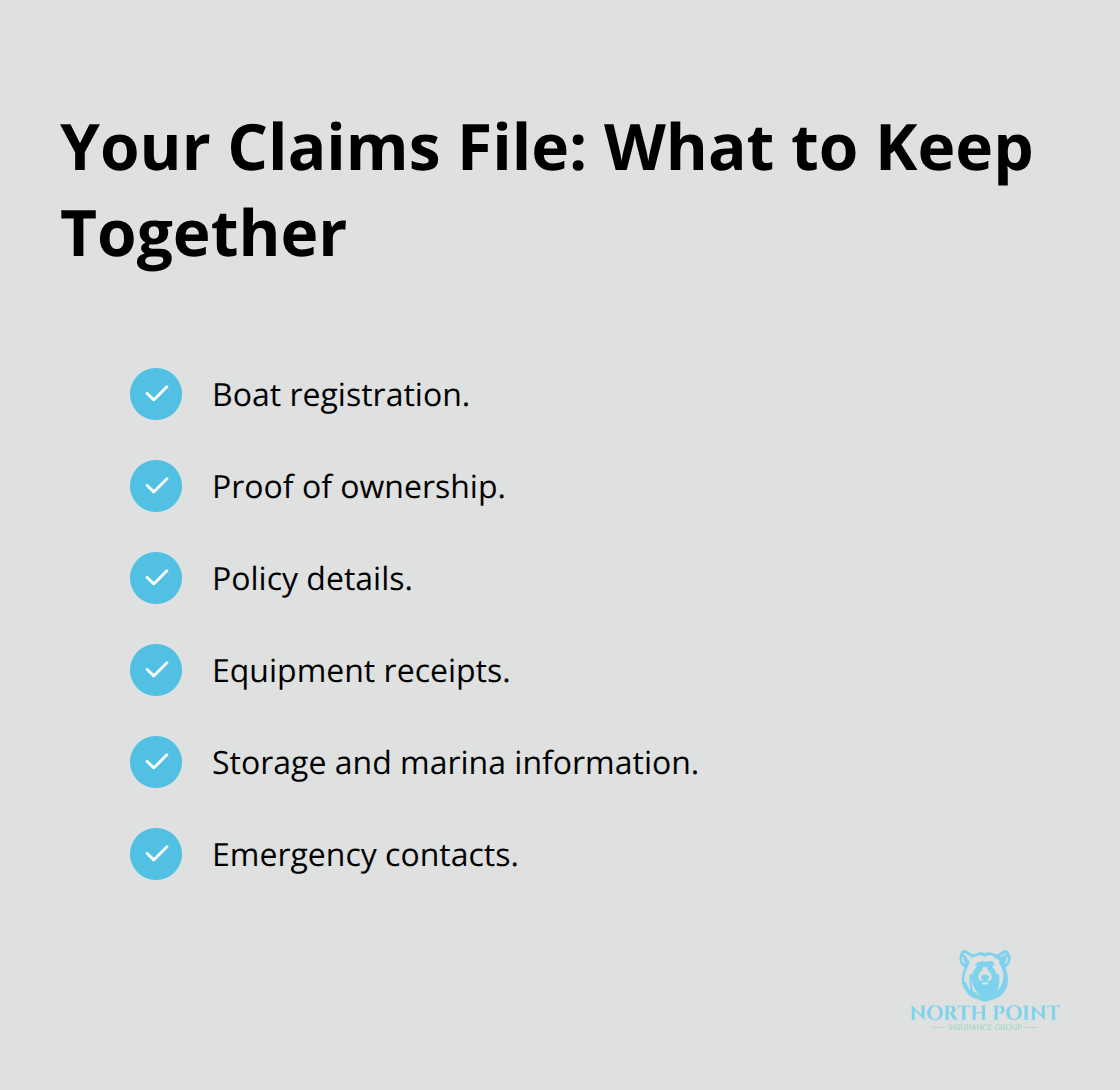
Beyond maintenance, organize a separate file containing your boat registration, proof of ownership, policy details, equipment receipts, storage and marina information, and emergency contacts in one accessible place. This centralized approach eliminates scrambling to find information when time matters most. You’ll have everything an adjuster needs without delays or missing documents.
Understand Your Coverage Limits and Exclusions
Policy limits and exclusions cause more claim problems than actual coverage gaps. Read your policy document thoroughly and highlight what is actually covered versus what is excluded, paying special attention to hurricane deductibles and named storm provisions. Florida marine policies frequently apply higher deductibles during hurricane season-sometimes 5 to 10 percent of your boat’s value instead of a flat amount-which means a $100,000 boat could have a $5,000 deductible during storm season rather than the standard $500. Understanding this difference prevents sticker shock at claim time.
Respond Quickly and Document Everything
When your adjuster requests information, respond within 48 hours, not within the allowed timeframe. Speed matters because adjusters handle multiple claims simultaneously, and fast responses keep your case moving. Document every interaction: note the adjuster’s name, date, time, and what was discussed in a claims journal. Save all correspondence-emails, letters, call notes-and preserve any information the insurer provides, since insurers occasionally communicate incorrectly and robust documentation helps verify facts and timelines.
If a claim takes longer than expected, request a status update and follow up politely but persistently. This approach signals you’re engaged and prevents your claim from sitting in a queue.
Final Thoughts
Filing a boat insurance claim becomes straightforward when you follow this boat insurance claims guide and act decisively in the first hours after damage occurs. Stop all activity that could worsen the damage, capture detailed photos from multiple angles, record the incident details while they’re fresh, and report the claim within 24 hours. Your quick response and organized documentation set the tone for how fast your adjuster processes the claim and approves payment.
Preparation before damage strikes separates smooth claims from frustrating ones. Maintain a detailed maintenance log for your boat, organize your policy documents and ownership records in one accessible location, and review your coverage limits annually-especially the higher deductibles that apply during hurricane season (which can reach 5 to 10 percent of your boat’s value instead of a flat amount). When you understand what your policy covers and what it excludes, you eliminate surprises at claim time.
We at North Point Insurance Group work with boat owners to find the right coverage for your specific vessel and boating habits. Our local agents shop multiple carriers to match your needs and help you prepare for claims before they happen. Contact us today to review your current policy or get a quote tailored to your boat.
The information provided in this blog is for general informational purposes only and does not constitute legal, financial, or insurance advice. Coverage options, terms, and availability may vary. Please consult with a licensed professional for advice specific to your situation. Artificial intelligence may have been used to generate text and images in some blog articles and may contain inacuracies.

