
Construction Project Builders Risk: Protecting Your Site
Construction sites face constant threats-from weather damage to equipment theft to accidents that halt progress. At North Point Insurance Group, we know that construction project builders risk can derail timelines and drain budgets if you’re not prepared.
This guide walks you through what builders risk insurance actually covers, the real dangers your site faces, and how to pick the right policy for your project.
What Builders Risk Actually Protects
Builders risk insurance covers three distinct asset categories on your construction site, and understanding each one prevents expensive gaps in protection. The first category is the building structure itself along with permanent materials attached to it-the foundation, framing, roofing, electrical wiring, plumbing, and fixtures that remain after completion. The second category covers temporary structures like scaffolding, temporary power systems, equipment sheds, and site fencing that support the construction process but are removed afterward.
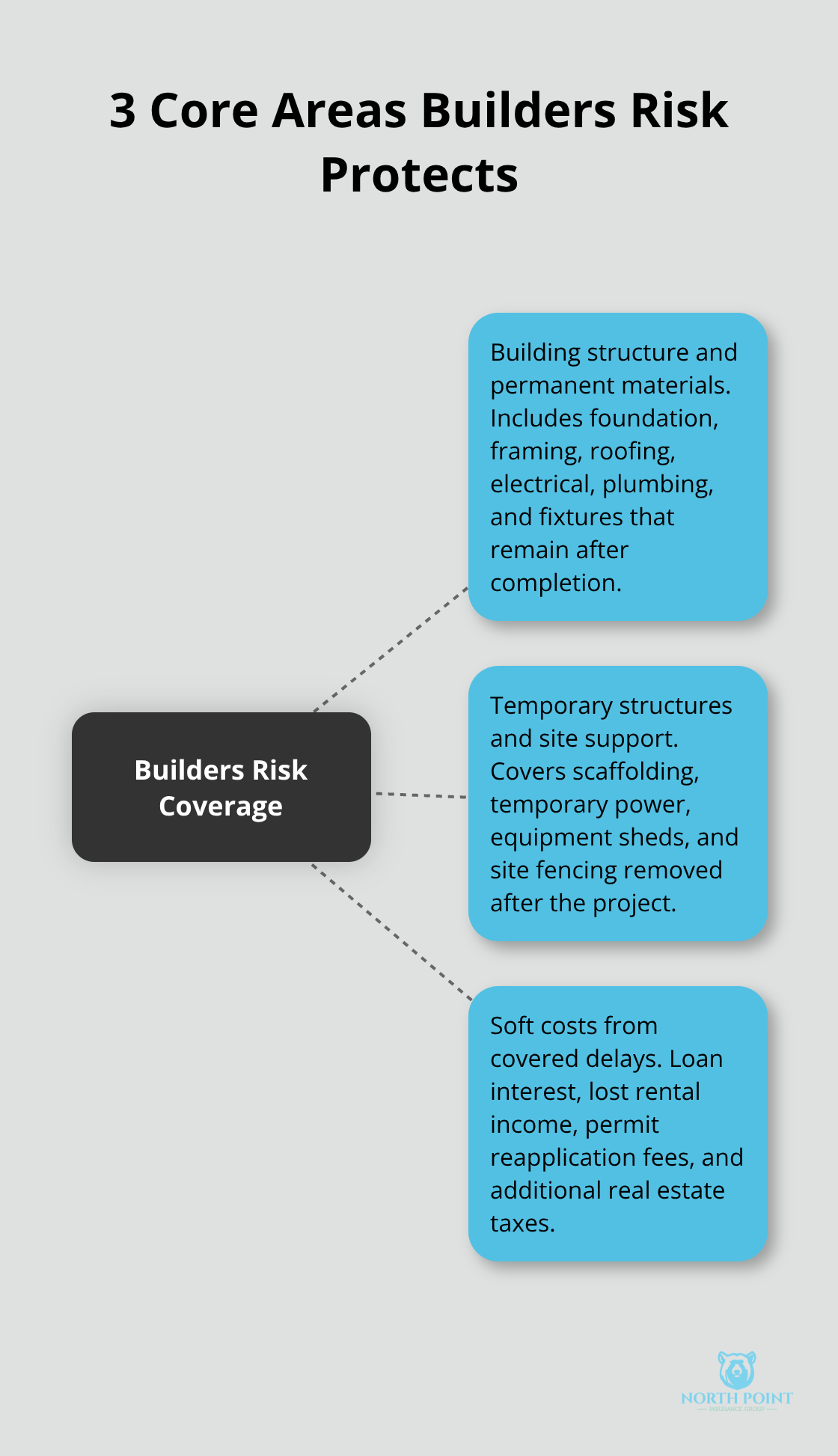
The third category addresses soft costs, which are the financial losses that accumulate when a covered loss delays your project-loan interest that keeps accruing, lost rental income, permit reapplication fees, and additional real estate taxes. Many contractors overlook temporary structures entirely, leaving thousands of dollars in unprotected assets on site. A six-month delay on a $2 million project costs $15,000 to $25,000 in soft costs alone, which is why soft cost coverage matters far more than most project managers realize.
Materials in Transit and Off-Site Storage
Materials traveling to your site and stored before installation require separate coverage because standard builders risk often excludes them. A $150,000 HVAC unit stolen en route leaves you paying out of pocket without transit coverage, and warehouse materials sitting at a staging facility face theft and weather damage that the main policy won’t cover. Set your transit limits based on your most expensive single shipment, not an average, because one high-value delivery can exceed typical coverage. Off-site storage coverage should align with your actual supply chain timeline-if materials sit in a warehouse for three months before installation, you need protection for those three months, not just the final week on site.
Theft, Vandalism, and Weather Losses
The National Insurance Crime Bureau reports that theft and vandalism on active construction sites commonly cost $400 to $1,000 per incident, with copper wiring, HVAC equipment, and power tools as top targets. Vandalism adds secondary costs beyond the initial loss-cleanup, broken windows, and damaged temporary structures can exceed the theft value itself. Weather-related losses are the most frequent builders risk claims; the National Weather Service attributes about $10 billion in annual U.S. property damage to severe thunderstorms, hail, and high winds, with construction sites at elevated risk due to exposed materials and incomplete structures.
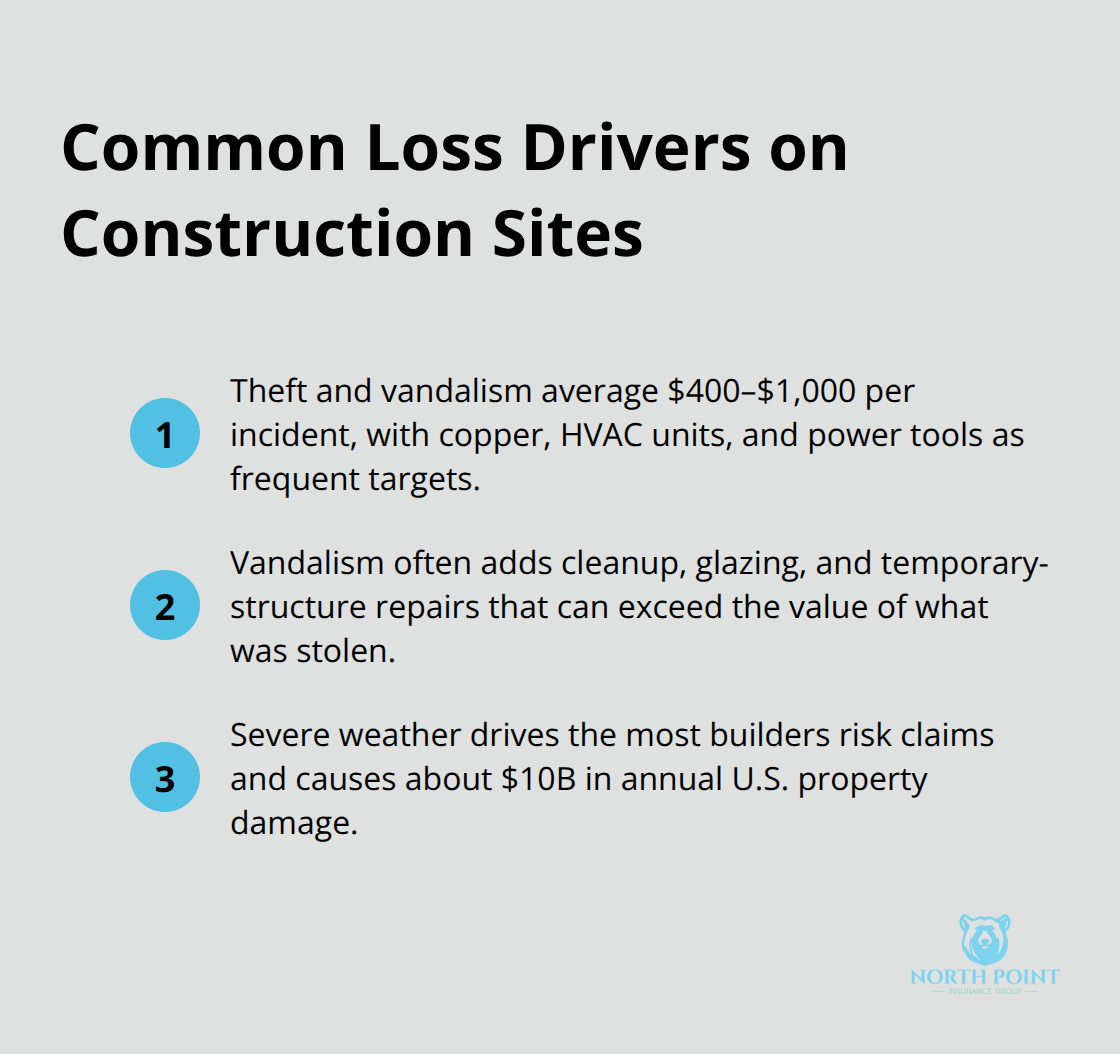
A single weather event destroys $50,000 to $150,000 worth of materials and pushes project timelines back months, amplifying those soft costs mentioned earlier.
Why Coverage Gaps Cost More Than You Think
Standard homeowner’s or commercial property policies explicitly exclude buildings under construction, leaving your site exposed. Without proper builders risk coverage, you face the full financial impact of theft, weather damage, and project delays. The right policy structure protects your timeline and budget before problems start.
What Really Disrupts Construction Timelines
Equipment Breakdowns Stop Work Immediately
Equipment breakdowns halt work faster than weather, and most contractors underestimate how quickly machinery failures cascade across a project. Excavators, cranes, concrete pumps, and compressors fail without warning-they fail when you can’t afford it. Builders risk insurance does not cover equipment breakdown or machinery failure; those losses fall outside standard construction coverage and require separate equipment breakdown policies or rental reimbursement endorsements. Equipment breakdowns typically do not cover costs to remove and install replacement equipment, and business interruption expenses. If your primary crane breaks down mid-project, you rent a replacement at $2,000 to $5,000 per day while your crew sits idle. A two-week breakdown costs $28,000 to $70,000 in rental fees alone, not counting lost labor productivity and schedule delays that ripple through the entire project timeline. The real problem is that contractors often assume builders risk covers this exposure, then discover the gap only after equipment fails.
Injuries and Liability Claims Create Hidden Costs
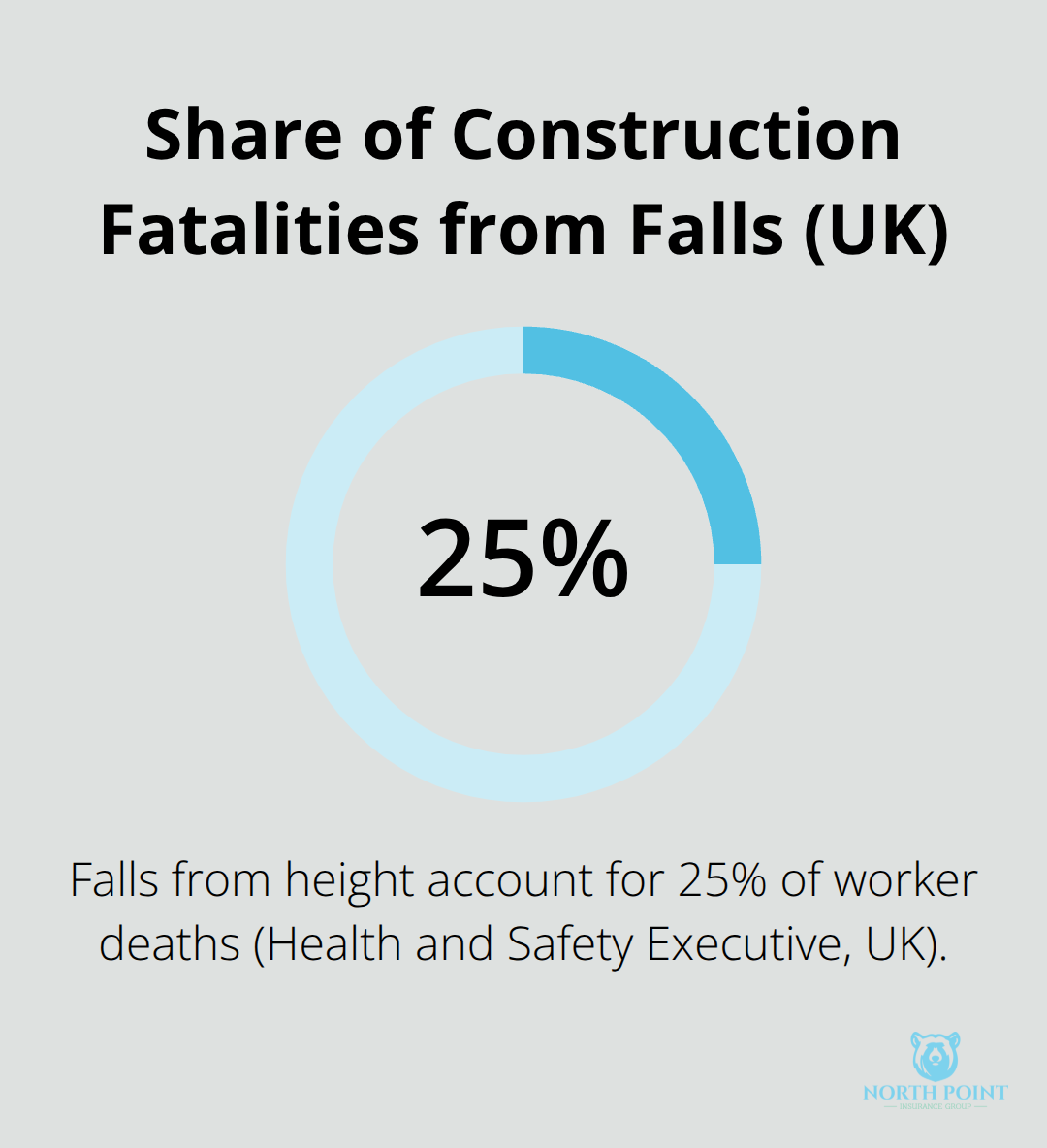
Accident-related injuries on site create a different financial trap. Workers’ compensation covers employee injuries, and general liability covers third-party bodily injury claims, but builders risk covers neither. A single serious injury triggers $100,000 to $500,000 in liability costs if someone sues, and workers’ comp premiums spike after a claim. Falls from height remain the leading cause of construction fatalities in the UK, accounting for 25 percent of worker deaths according to the Health and Safety Executive, yet many sites still lack proper guardrails, safety nets, or height-safety training.
Slips, trips, and falls on poorly maintained sites cause thousands of injuries annually that prevention could stop-better housekeeping and designated walkways eliminate most of these incidents.
Supply Chain Failures Extend Timelines Beyond Coverage
Supply chain disruptions and material delays now represent a third major threat that builders risk addresses only partially. Soft cost endorsements cover the financial bleeding when a covered loss delays your project, but supply chain failures-supplier bankruptcies, shipping delays, manufacturing problems-typically fall outside coverage. A supplier stopping production mid-order leaves you scrambling for alternatives, renegotiating timelines, and absorbing cost overruns. Materials stolen in transit or damaged in storage create both immediate loss and schedule pressure. Asbestos identification in renovation projects adds another layer of delay; around 500,000 public buildings in the UK may contain asbestos, and discovering it during work requires immediate stoppage, testing, and specialized removal that costs tens of thousands and extends timelines by weeks or months.
Layering Protection Across Multiple Policies
Builders risk alone cannot protect your entire project-it handles property damage and soft costs from covered losses, but equipment breakdown, injury liability, and supply chain risks demand separate policies and proactive management. Understanding what each policy covers prevents expensive gaps when problems strike. The next section walks you through selecting the right builders risk policy and the endorsements that fill these protection gaps.
Picking the Right Builders Risk Policy for Your Project
Calculate Your Coverage Limits Based on Total Project Cost
Start by listing every asset on your site that needs protection, because vague estimates lead to underinsurance and coinsurance penalties that reduce payouts. Calculate the total construction cost-that becomes your baseline coverage limit, since a practical rule of thumb sets coverage equal to anticipated total project cost. Inventory materials across all project phases: what arrives on-site, what gets stored off-site, what travels in transit, and what temporary structures support the work. A $2 million residential project needs different coverage than a $2 million commercial renovation, because renovation work carries higher risk from discovering hidden asbestos or structural damage that halts progress.
Account for Location, Materials, and Project Type
Most builders risk policies start around $375 in many states, but premiums spike based on project cost, property type, location relative to fire stations and flood zones, construction materials, and selected endorsements. Coastal properties and flood-prone areas pay substantially more, as do projects using wood framing versus concrete. Remodeling projects typically cost more to insure than new construction because existing structures present hidden risks, while installation projects are usually least expensive.
Protect Materials in Transit and Off-Site Storage
Once you know your project specifics, you need coverage for materials in transit and off-site storage as separate line items-not add-ons tacked on later. Set transit limits based on your single most expensive shipment, not an average delivery, because one high-value HVAC unit or steel shipment can exceed standard coverage. Off-site storage coverage should match your actual supply chain timing; if materials sit in a warehouse for three months, you need three months of protection, not one.
Customize Soft Costs and Endorsements to Your Budget
Soft cost endorsements matter far more than most contractors admit-a six-month delay costs $15,000 to $25,000 in accumulated interest, lost rent, and permit fees, yet many policies lack this coverage until you specifically request it. Tailor endorsements to your actual budget items; generic soft costs forms won’t capture real expenses like extended loan interest or permit reapplication fees. Request specific limits for expediting expenses, typically between $10,000 and $100,000 depending on project scale and the cost of delays to your bottom line.
Work with a Construction Insurance Specialist
Don’t assume all carriers understand your specific exposures-work with a construction-insurance specialist or agent who asks detailed questions about your timeline, materials, temporary structures, and past loss history. An experienced agent reviews your policy form line by line before you sign, confirming that coverages, conditions, and exclusions actually match your project reality. They catch gaps like missing testing coverage for mechanical systems, absent ordinance-or-law coverage for code upgrades after a loss, or inadequate expediting expense limits that leave you unable to pay rush shipping and overtime labor when delays hit. High-value or multi-trade commercial projects need customization that bare-bones policies cannot provide. The agent should also verify when coverage starts-usually when contracts are signed, though some policies impose start-date restrictions-and when it ends at project completion, occupancy, or when the building is put to intended use.
Final Thoughts
Builders risk insurance protects your construction project from the financial devastation that weather, theft, equipment failure, and project delays create. A $2 million project delayed six months bleeds $15,000 to $25,000 in soft costs alone, theft and vandalism cost $400 to $1,000 per incident on average, and a single equipment breakdown costs $28,000 to $70,000 in rental fees while your crew sits idle. Standard homeowner’s and commercial property policies explicitly exclude buildings under construction, leaving your site completely exposed without proper construction project builders risk coverage.
Protecting your construction investment starts with inventorying every asset across all project phases-materials in transit, off-site storage, permanent building components, and temporary structures. Set your coverage limits equal to your total anticipated construction cost, then work backward to identify gaps in transit coverage, off-site storage protection, soft costs, and endorsements for expediting expenses and testing. Location matters significantly; coastal properties and flood-prone areas pay more, as do renovation projects with hidden asbestos and structural risks.
An experienced construction insurance specialist reviews your policy line by line before you sign, catching exclusions and conditions that don’t match your actual project reality. We at North Point Insurance Group understand that construction project builders risk demands more than generic coverage, and our local agents shop multiple carriers to deliver tailored protection that matches your timeline, budget, and specific exposures. Contact us today for a quote and let our team build the right policy for your next project.
The information provided in this blog is for general informational purposes only and does not constitute legal, financial, or insurance advice. Coverage options, terms, and availability may vary. Please consult with a licensed professional for advice specific to your situation. Artificial intelligence may have been used to generate text and images in some blog articles and may contain inacuracies.

