

Home Insurance Policy Guide: Choosing the Right Coverage
Most homeowners buy a policy and never look at it again. That’s a mistake that costs thousands when claims happen.
At North Point Insurance Group, we’ve seen too many people discover they’re underinsured or missing coverage they thought they had. This home insurance policy guide walks you through the coverage types that matter, how to calculate what you actually need, and the gaps that catch people off guard.
What Your Home Insurance Actually Covers
Your dwelling coverage pays to rebuild your home if it’s damaged or destroyed, but the dollar amount you select determines whether you’re protected or exposed. According to the Texas Department of Insurance, policies typically require you to insure at least 80% of your home’s replacement cost, though some companies demand 100%. This isn’t a suggestion-it’s the threshold between adequate protection and a financial disaster. If a fire destroys your 2,500-square-foot home with current rebuilding costs at $400 per square foot, you’re looking at $1 million in replacement costs. Insuring it for $800,000 leaves a $200,000 gap that comes straight from your pocket. Calculate replacement cost by multiplying your home’s square footage by current local construction costs, not what you paid for the property years ago.
Personal Property Coverage Limits
Personal property coverage protects your belongings inside the home, but most people make costly mistakes here: this coverage is typically limited to a percentage of your dwelling limit, often 50–70%. If your dwelling coverage is $500,000, your personal property might max out at $250,000. That sounds reasonable until you realize a modest home’s contents-furniture, electronics, clothing, kitchen appliances-easily exceed that amount. The Texas Department of Insurance recommends maintaining a detailed home inventory with photos, receipts, and serial numbers for everything valuable.
The number 100% seems to be not appropriate for this chart. Please use a different chart type. High-end items like jewelry, art, and electronics need endorsements called scheduled personal property riders that cover them at full replacement cost without depreciation.
Liability Protection
Liability coverage protects you when someone is injured on your property or you accidentally damage someone else’s property, and it includes legal defense costs. Standard policies typically include $100,000 to $300,000 in liability protection, but that’s often insufficient. A serious injury lawsuit can easily exceed $500,000, which is why the Texas Department of Insurance suggests considering umbrella liability coverage that sits above your home policy and costs relatively little-often $150–$300 annually for an extra $1 million in protection.
Additional Living Expenses Coverage
Additional Living Expenses coverage pays for hotel, meals, and other costs if your home becomes uninhabitable after a covered loss. This coverage is commonly set at 10–20% of your dwelling limit, but that calculation often falls short. If your home requires three months of repairs and you need to rent a $2,000-per-month apartment while it’s being rebuilt, you’ll spend $6,000 that ALE must cover. The Texas Department of Insurance advises calculating your potential displacement costs-consider local rental rates and realistic repair timelines-then verify your ALE limit covers the full period. Most people overlook these numbers until a claim forces them to pay out of pocket for temporary housing while waiting for repairs.
The coverage limits you select today directly affect what happens when disaster strikes tomorrow, which is why the next step involves calculating exactly how much protection your specific home actually needs.
How Much Coverage Does Your Home Actually Need
The gap between what homeowners think they’re insured for and what they actually need creates financial ruin. Start by calculating your home’s replacement cost, not its market value. Your home’s market value includes the land; replacement cost covers only rebuilding the structure itself. According to the Texas Department of Insurance, you need to insure at least 80% of replacement cost, though many insurers now require 100%. Multiply your home’s square footage by current local construction costs per square foot to find this number. A 2,500-square-foot home in a market where construction runs $350 per square foot means $875,000 in replacement cost. If you insure it for $700,000, you’ve created a $175,000 shortfall that you’ll pay directly when disaster strikes. Local builders and contractors provide current construction costs for your area, or contact your county assessor’s office for recent building permit data that shows what similar homes cost to rebuild. Most people underestimate these numbers because they anchor to what they paid for the property a decade ago, when costs were significantly lower.
Inventory Your Possessions Before Disaster Hits
Personal property coverage typically caps at 50–70% of your dwelling limit, which sounds adequate until you actually count what’s inside your home. Take photos of every room, including closet contents and drawers. Document appliances, furniture, electronics, and clothing with receipts or price estimates. The Texas Department of Insurance emphasizes that this inventory must include serial numbers for electronics and proof of purchase. Most households contain $150,000 to $250,000 in belongings, and standard coverage limits frequently max out at $250,000. High-value items demand scheduled personal property endorsements that provide full replacement cost without depreciation. Jewelry, art, collectibles, and expensive electronics require separate listings with appraisals attached. These riders cost extra but eliminate the depreciation penalty that reduces claim payouts on standard coverage. Store your inventory digitally in cloud storage so it survives the same disaster that damages your home.
Calculate Your Actual Displacement Costs
Additional Living Expenses coverage typically covers 10–20% of dwelling limits, but most people set this amount without calculating real costs. If your home needs three months of repairs and local rental apartments cost $2,000 monthly, you’ll need $6,000 in ALE coverage just for rent. Add meals, utilities, and miscellaneous expenses, and the number climbs to $8,000 or $10,000. The Texas Department of Insurance recommends researching actual rental rates in your area and estimating realistic repair timelines based on similar claims. A major kitchen or bathroom renovation typically requires 6–12 weeks; roof replacement takes 4–8 weeks depending on weather and contractor availability. Call local contractors and ask how long repairs typically take after major damage. Multiply your monthly housing and living expenses by that timeframe. If your calculation shows you need $12,000 in ALE coverage but your policy limits you to $7,500, that $4,500 gap comes from your emergency fund when your home is uninhabitable.
Identify Coverage Gaps That Standard Policies Miss
Standard homeowners policies exclude flood damage and earthquakes, yet these events destroy homes regularly. The Texas Department of Insurance notes that flood insurance requires separate coverage through the National Flood Insurance Program or private flood policies, with a typical 30-day waiting period before coverage begins. Earthquake coverage also demands a separate endorsement or policy. If you live in a coastal area, windstorm damage may require separate coverage or separate percentage deductibles through the Texas Windstorm Insurance Association.
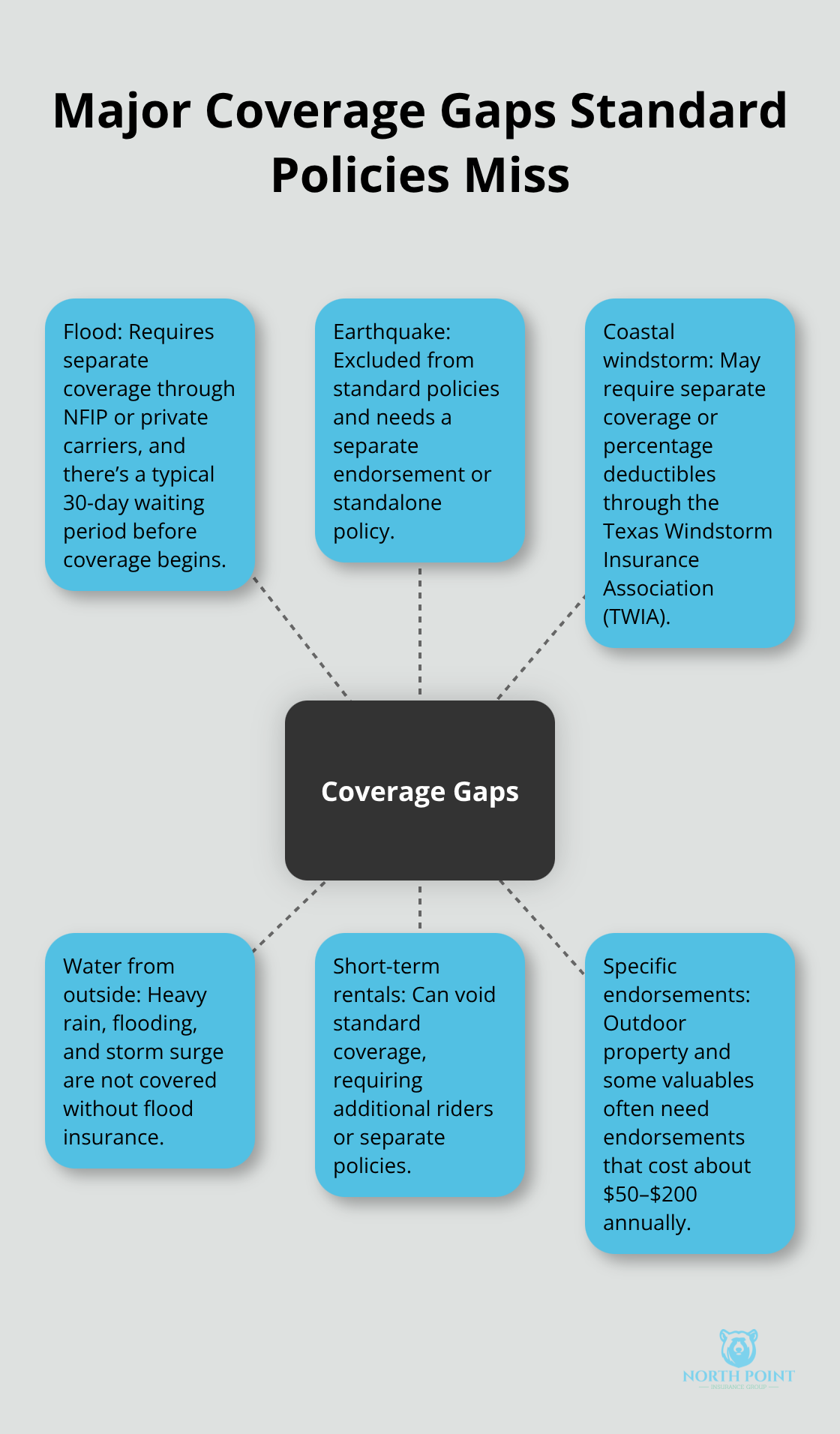
Water damage from plumbing failures, roof leaks, and burst pipes falls under standard coverage, but coverage gaps that standard policies miss include outdoor property and some valuables. These gaps require specific endorsements that cost $50–$200 annually but protect against expensive claims. Short-term rental activity voids standard coverage entirely, requiring additional riders or separate policies. Review your policy’s exclusions section carefully, as what’s not listed is what won’t be paid when you file a claim.
The coverage limits you’ve calculated and the gaps you’ve identified form the foundation for selecting the right policy, but one more critical step remains: understanding how to evaluate and compare actual policies from different insurers to lock in the protection your home truly needs.
What Your Standard Policy Won’t Cover
Most homeowners discover their coverage gaps during the worst possible moment: when filing a claim after disaster strikes. Standard homeowners policies contain exclusions that leave massive financial exposure, and these gaps demand your immediate attention. Flood damage is one of the most common exclusions in standard policies, yet flooding causes more property damage annually than any other natural disaster. If your home sits in a flood zone or even moderate risk area, standard coverage pays nothing when water enters your home. Flood insurance through the National Flood Insurance Program or private flood carriers requires separate applications, and critically, coverage doesn’t begin for 30 days after purchase. This waiting period means homeowners who wait until a weather forecast predicts heavy rain cannot obtain coverage in time. Apply for flood insurance now if you’re in any flood risk area, even if you’re not required by your lender.
Earthquake damage follows the same pattern: standard policies exclude it entirely, yet areas beyond traditional earthquake zones experience significant seismic activity. California, Washington, and the Pacific Northwest face obvious earthquake risk, but Tennessee, Arkansas, and Oklahoma have experienced damaging earthquakes in recent years. Adding earthquake coverage costs $150 to $400 annually depending on your home’s value and location, but without it, a single quake could cost you hundreds of thousands in uninsured repairs.
Water Damage Requires Careful Policy Review
Water damage exclusions create confusion because standard policies cover some water damage while excluding others. Burst pipes, roof leaks, and plumbing failures fall under standard coverage, but water that enters from outside-whether from heavy rain, flooding, or storm surge-does not. The distinction matters enormously. A broken water heater that floods your basement costs thousands and falls under standard coverage. The same basement flooded by three inches of rain during a hurricane costs just as much but receives zero coverage without separate flood insurance.
Coastal homeowners in Texas face additional complexity: the Texas Windstorm Insurance Association provides windstorm coverage for properties within coastal areas, but this coverage specifically excludes water damage from the same storm. A hurricane that damages your roof qualifies for TWIA coverage, but water entering through that damaged roof does not. Understanding these distinctions requires reading your policy’s water damage section carefully and contacting your agent to clarify exactly what water scenarios your policy covers. If you live near water or in areas prone to heavy rainfall, flood insurance isn’t optional-it’s a necessity that protects your largest asset.
Expensive Items Need Individual Attention
Standard personal property coverage depreciates items based on age and condition, meaning a five-year-old laptop or a diamond ring loses 40 to 60 percent of its value before your claim gets paid. High-value items like jewelry, art, collectibles, and electronics require scheduled personal property endorsements that eliminate depreciation and cover items at full replacement cost. These endorsements demand appraisals: a jeweler’s appraisal for jewelry, an art appraiser for paintings or sculptures, and documentation of purchase price for electronics. The cost of appraisals runs $100 to $300 per item, but without them, insurance companies deny claims for items they consider suspicious or overvalued.
A necklace you inherited that’s worth $8,000 but has no documentation might receive payment at $2,000 under standard coverage. The same necklace with a scheduled endorsement and professional appraisal receives full replacement cost with no depreciation penalty. Contact your insurance agent about which items in your home qualify for scheduled endorsements, then obtain appraisals before a loss occurs. Items kept in home safes also face coverage limits: standard policies cap safe deposit box contents at $2,500 to $5,000 regardless of actual value. If your safe contains $50,000 in jewelry, cash, or documents, that $2,500 limit leaves a $47,500 gap that scheduled endorsements close. The cost of adding these endorsements typically runs $50 to $150 annually per item, but protecting a $10,000 watch or $15,000 engagement ring makes this investment non-negotiable.
Final Thoughts
Selecting the right home insurance policy guide requires three critical decisions: calculating what your home actually costs to rebuild, identifying gaps that standard policies won’t cover, and choosing limits that match your real financial exposure. Most homeowners anchor their coverage to outdated property values or accept whatever limits their lender requires, then face devastating out-of-pocket costs when claims happen. Your dwelling coverage must reflect current construction costs in your area, not what you paid for the property years ago, and personal property limits need scheduled endorsements for high-value items.
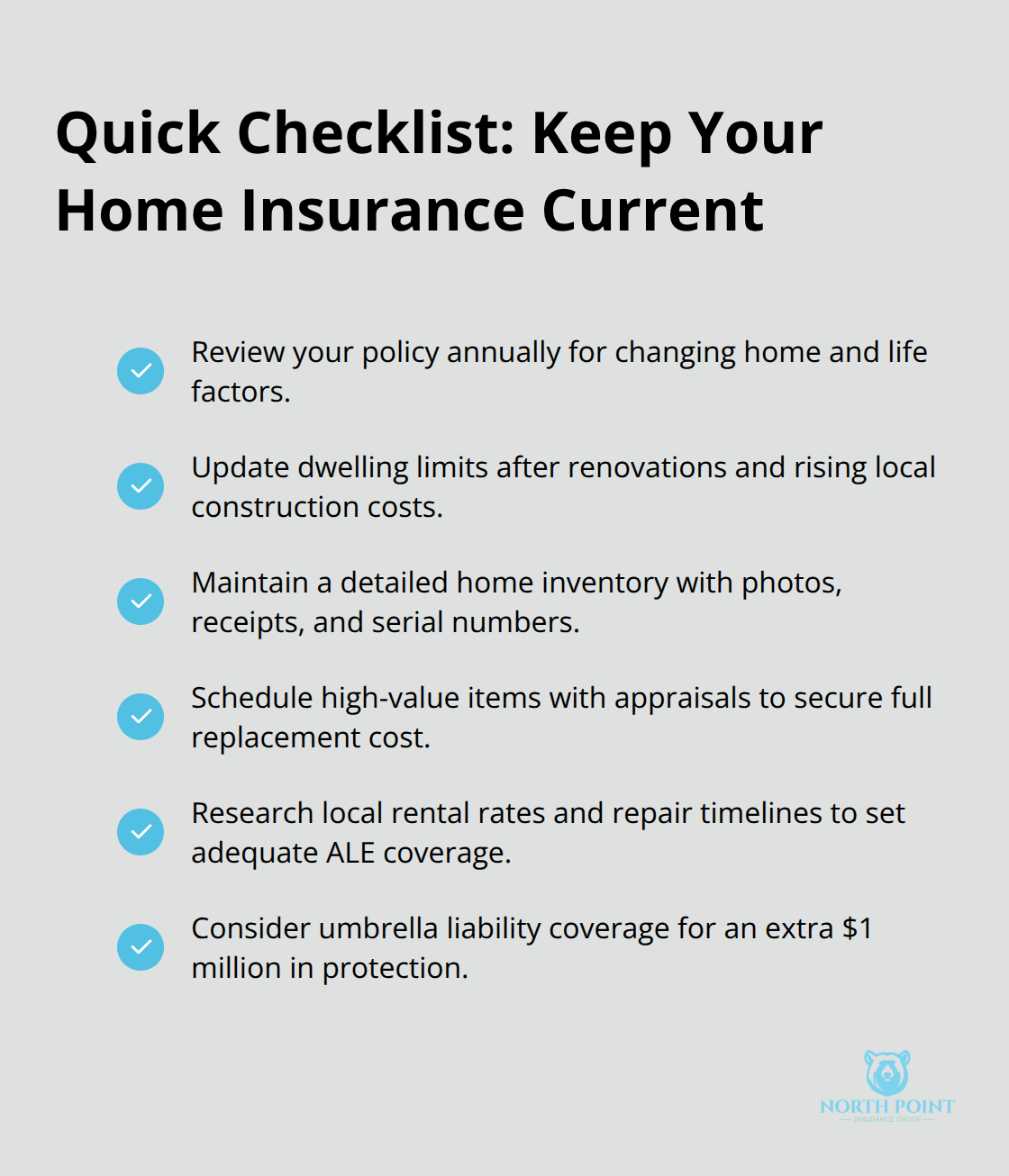
Review your policy annually because coverage needs change as your home and life evolve. Home improvements increase replacement cost, new purchases expand personal property value, and local construction costs rise yearly-after major renovations or significant purchases, contact your agent to verify your limits still match your home’s current value. Life changes matter too: if you start a home-based business, rent out a room, or list your home on short-term rental platforms, your standard policy becomes void and requires additional riders or separate coverage.
We at North Point Insurance Group understand that navigating home insurance decisions feels overwhelming, which is why our local agents work to find coverage that actually fits your home and budget. Our agents provide the personal guidance that call centers can’t match, walking you through replacement cost calculations and helping you protect what matters most.
The information provided in this blog is for general informational purposes only and does not constitute legal, financial, or insurance advice. Coverage options, terms, and availability may vary. Please consult with a licensed professional for advice specific to your situation. Artificial intelligence may have been used to generate text and images in some blog articles and may contain inacuracies.

