

New Teen Driver Rates: What Every Family Should Budget
Adding a teen driver to your family’s insurance policy hits your wallet hard. New teen driver rates have climbed significantly, and most families aren’t prepared for the cost.
At North Point Insurance Group, we help families understand what they’ll actually pay and how to bring those costs down. This guide breaks down current rates, shows you where to save money, and walks you through the coverage decisions that matter most.
What Teen Drivers Actually Cost Right Now
Adding a 16-year-old to your family’s auto policy will cost you roughly $2,735 per year, according to Forbes Advisor data. That works out to about $230 monthly, though your actual number depends on where you live, your teen’s driving history, and what vehicle they’ll drive. The rates are steep because teenage drivers represent a genuine risk. The fatal crash rate at night among teen drivers (ages 16–19 years) is about 3 times as high as that of adult drivers (ages 30–59 years), according to the CDC. Insurance companies price that reality into every quote they generate for families like yours.
How Age Shapes the Price Tag
A 14 to 17-year-old costs you around $247 annually in premium costs based on Progressive’s September 2023 through August 2024 data. At 18, that jumps to $272. The good news arrives at 19, when rates start dropping. Your teen’s rate falls about 10 percent once they hit 19, another 5 percent at 20, and 6 percent more at 21. This pattern continues through the twenties and thirties, with rates gradually settling lower as driving experience accumulates.
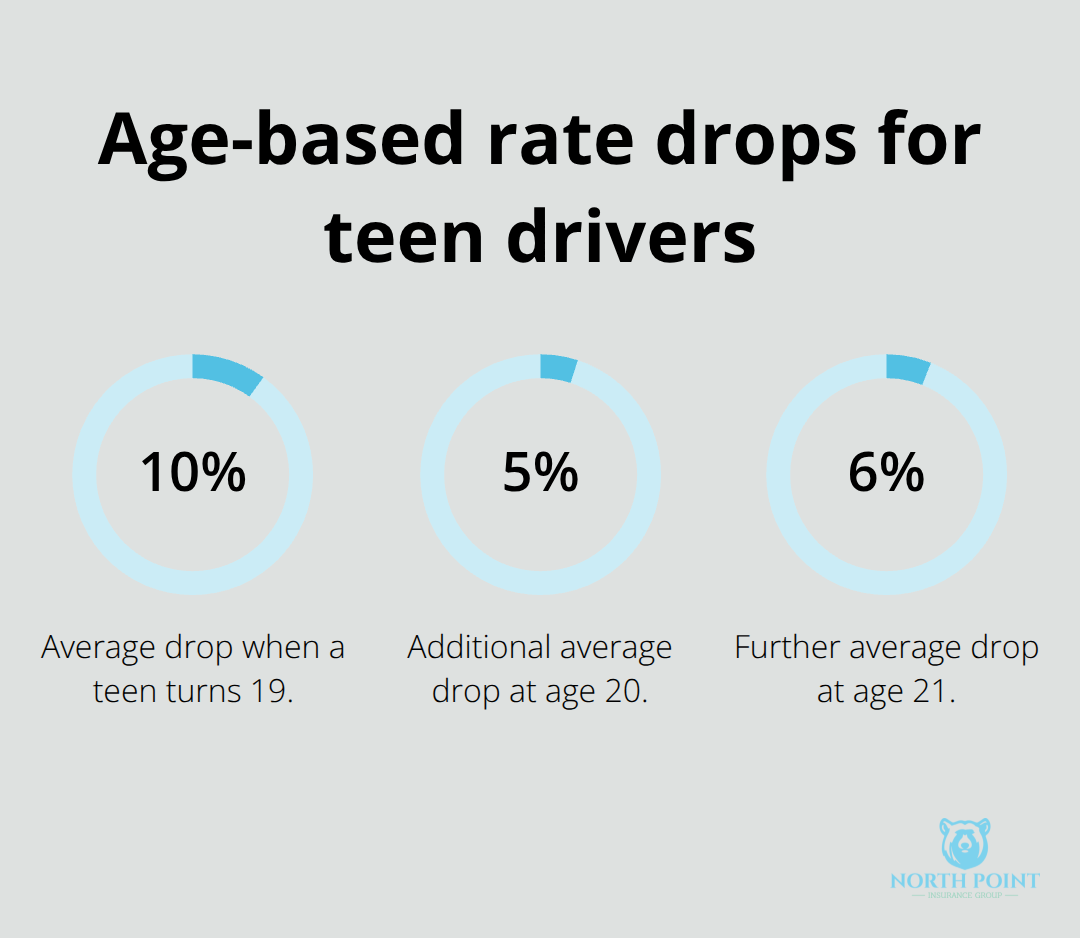
Those brutal first few years of teenage driving are genuinely the most expensive, but they don’t last forever. Your teen’s insurance costs will decline measurably as they age and prove they can handle the road responsibly.
Where You Live Changes Everything
Your ZIP code matters far more than most families realize. A teenager in rural Montana will pay dramatically less than a teenager in downtown Atlanta or Los Angeles. Urban areas carry higher rates because accident frequency is higher, medical costs are steeper, and theft risk climbs. State regulations also create significant variation. Some states mandate higher liability limits, which pushes premiums up across the board.
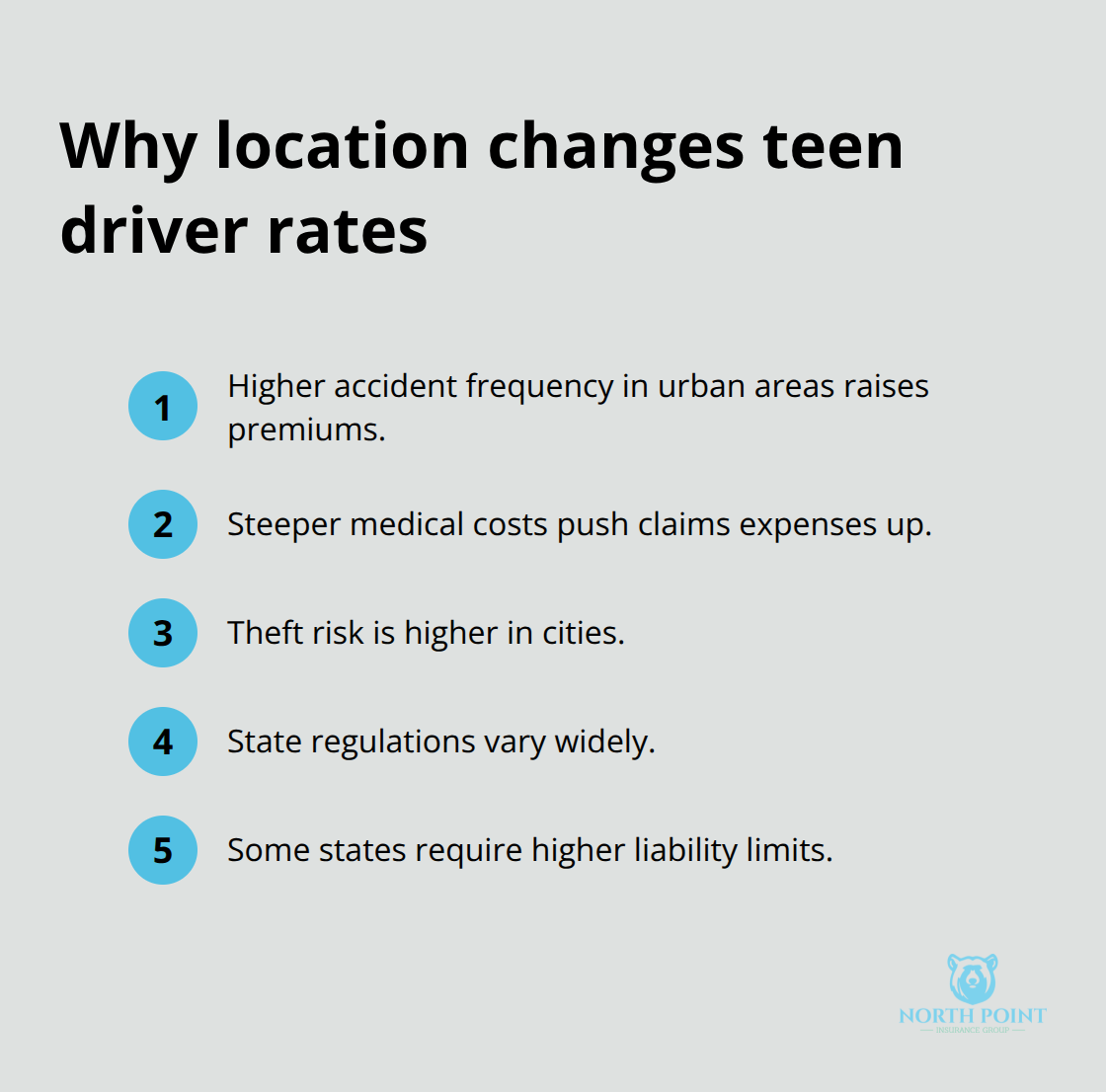
If you’re considering adding your teen to your policy versus buying separate coverage, get quotes in your specific area. The Forbes Advisor estimate of $2,735 annually is a national average, and your family might land well above or below that number based on local conditions alone.
What Happens Next
Now that you understand what your teen will cost you, the real question becomes: how do you bring that number down? Several proven strategies exist to reduce your premium without sacrificing the coverage your teen needs.
How to Cut Teen Driver Insurance Costs
Good Grades and Safety Training Pay Off
The $230 monthly average for a 16-year-old on your policy isn’t set in stone. Families reduce that number substantially through specific actions. Your teen’s grades and driving behavior directly impact what you’ll actually pay. Good student discounts apply when your teen maintains a B average or better, and most states recognize this with approximately 5 percent off your premium. That might not sound dramatic until you calculate it: 5 percent of $2,735 annually saves you roughly $137 per year, which compounds quickly over three years of high school. Safety courses accelerate this benefit further by demonstrating your teen has formal training in hazard recognition and defensive techniques.
Usage-Based Insurance Rewards Safe Driving
Usage-based insurance programs like Snapshot reveal exactly how your teen drives. The mobile app tracks harsh braking, rapid acceleration, and distracted driving patterns, then rewards safe behavior with additional discounts. Progressive’s Snapshot program shows real-time feedback when a teen is driving distracted, which means you know immediately if attention lapses are happening behind the wheel. This transparency changes family conversations about responsibility fast. Your teen’s actual driving habits determine the discount level, not assumptions about teenage drivers as a group.
Bundling and Multi-Car Discounts Stack Up
Bundling your auto, home, and life policies with the same carrier typically generates 10 to 15 percent savings across your entire account. Adding a second vehicle triggers multi-car discounts that further compress your teen’s portion of the bill. Families with multiple vehicles on one policy see meaningful relief because insurance companies reward loyalty and volume. These discounts work together rather than competing with each other.
The Real Savings Add Up Fast
A teen with a B average who enrolls in a safety course, maintains safe driving habits tracked through usage-based monitoring, and sits on a bundled multi-car policy could realistically reduce their annual cost from $2,735 to under $2,200, putting you back near $180 monthly instead of $230. That’s real money across twelve months. Shopping quotes across multiple carriers matters too because rates vary significantly by company even within the same ZIP code. An independent agent who represents 20 or more carriers can identify which company prices your specific teen lowest rather than accepting the first quote you receive. Regional variations mean the discount structure that saves your neighbor the most might not be your best option, so comparison shopping isn’t optional if you want the lowest rate your family qualifies for.
The discounts you qualify for depend on your specific situation, which is why the next step involves understanding what coverage your teen actually needs.
What Coverage Does Your Teen Actually Need
Liability Limits Protect Your Family’s Future
Your teen’s coverage needs differ from yours because they’re statistically riskier on the road. Liability limits protect you if your teen causes an accident that injures someone else or damages their property. Most states require a minimum of 25/50/25, meaning $25,000 bodily injury per person, $50,000 per accident, and $25,000 property damage. That baseline sounds adequate until you consider what happens when your teen causes a serious multi-car collision. Medical bills for multiple injured parties quickly exceed $50,000, and if the other driver sues your family for damages, you face personal liability for anything above your policy limits. We recommend 100/300/100 limits for families adding a teen driver, which costs only slightly more than state minimums but protects your household’s net worth substantially better. A lawsuit judgment can attach to your home, bank accounts, and future income if you’re underinsured when your teen causes a significant accident.
Collision and Comprehensive Coverage Decisions
Comprehensive covers theft, weather, and vandalism while collision covers accidents with other vehicles or objects. If your teen drives a vehicle worth less than $5,000, dropping both coverages might make financial sense because the premium savings exceed the replacement value. However, if your teen drives a newer car worth $15,000 or more, collision coverage protects your investment when your teen inevitably has a fender bender. Comprehensive is typically inexpensive and covers events completely outside your teen’s control, so keeping it makes sense for any vehicle worth replacing. Try increasing your deductible from $500 to $1,000 on collision to lower the monthly premium; your teen’s driving will improve, and most minor accidents cost less than $1,000 to repair anyway.
Extra Protections That Matter
Additional protections like roadside assistance, rental car reimbursement, and loan payoff coverage apply to your teen if included on your policy. These extras cost minimal amounts while providing genuine protection during the stressful early months of teen driving. Roadside assistance helps when your teen experiences a flat tire or dead battery far from home.
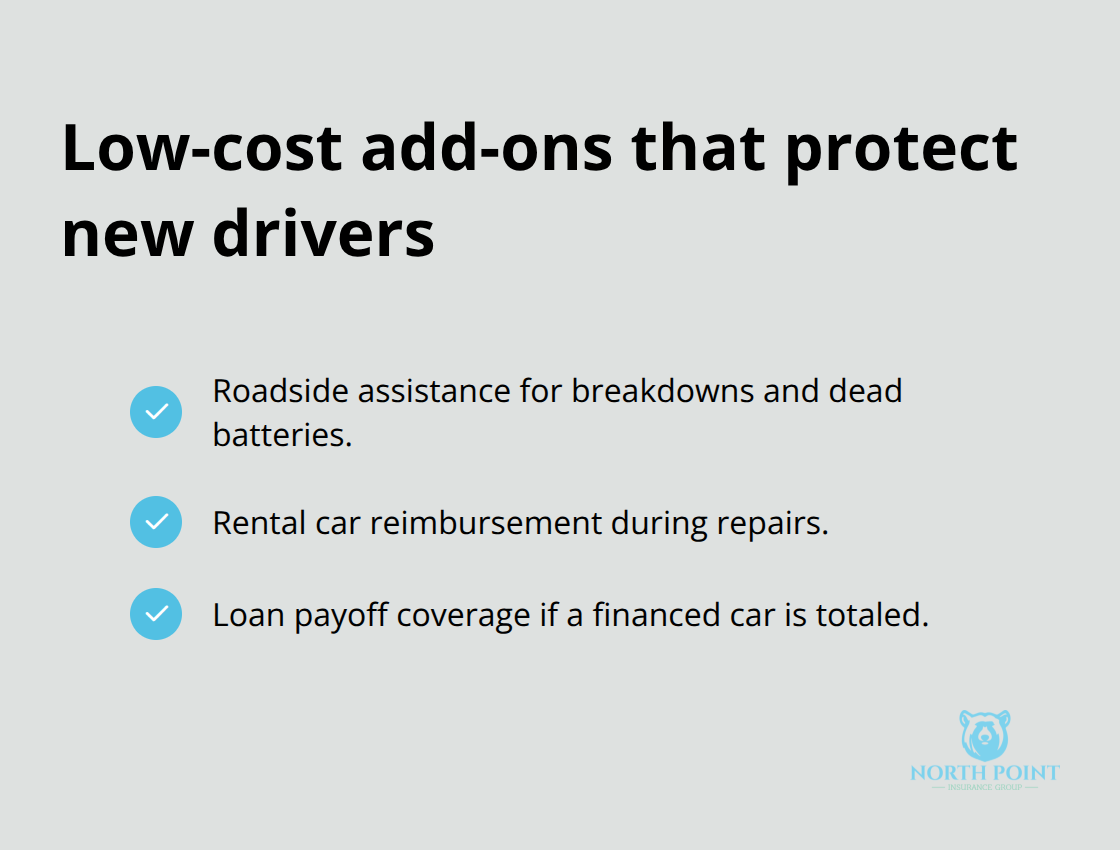
Rental car reimbursement covers transportation costs if your teen’s vehicle sits in the repair shop after an accident. Loan payoff coverage protects you if your teen’s financed vehicle is totaled and the insurance payout falls short of what you still owe on the loan.
Final Thoughts
Adding a teen driver to your policy requires realistic budgeting from day one. New teen driver rates demand that families plan for higher premiums in the first few years, then adjust expectations downward as their teen ages and gains experience. Start by calculating your baseline cost using quotes specific to your ZIP code, vehicle type, and teen’s age, then layer in the discounts we covered: good student savings, usage-based monitoring rewards, and bundling benefits.
Long-term cost management means revisiting your policy annually since your teen’s rate drops measurably at 19, 20, and 21. Review your coverage limits and deductibles each renewal period to confirm they still match your family’s situation. As your teen’s driving record stays clean, ask your agent about additional discounts that apply after 12 months of continuous coverage, and consider increasing your deductible from $500 to $1,000 if your teen’s driving improves during that first year.
The most important step is getting professional guidance tailored to your specific circumstances. At North Point Insurance Group, our independent agents in Alpharetta represent 20+ carriers and can compare quotes across multiple companies to find the lowest rate your family qualifies for. Contact North Point Insurance Group to discuss your teen driver situation with a local agent who understands Georgia rates and can build a policy that protects your family while fitting your budget.
The information provided in this blog is for general informational purposes only and does not constitute legal, financial, or insurance advice. Coverage options, terms, and availability may vary. Please consult with a licensed professional for advice specific to your situation. Artificial intelligence may have been used to generate text and images in some blog articles and may contain inacuracies.

