

Teen Auto Insurance Tips: Saving on Your First Policy
Getting your teen behind the wheel comes with higher insurance costs. We at North Point Insurance Group know that parents want practical teen auto insurance tips without breaking the bank.
This guide walks you through why premiums spike for young drivers, concrete ways to cut those costs, and how to shop for the best coverage.
Why Teen Drivers Cost More to Insure
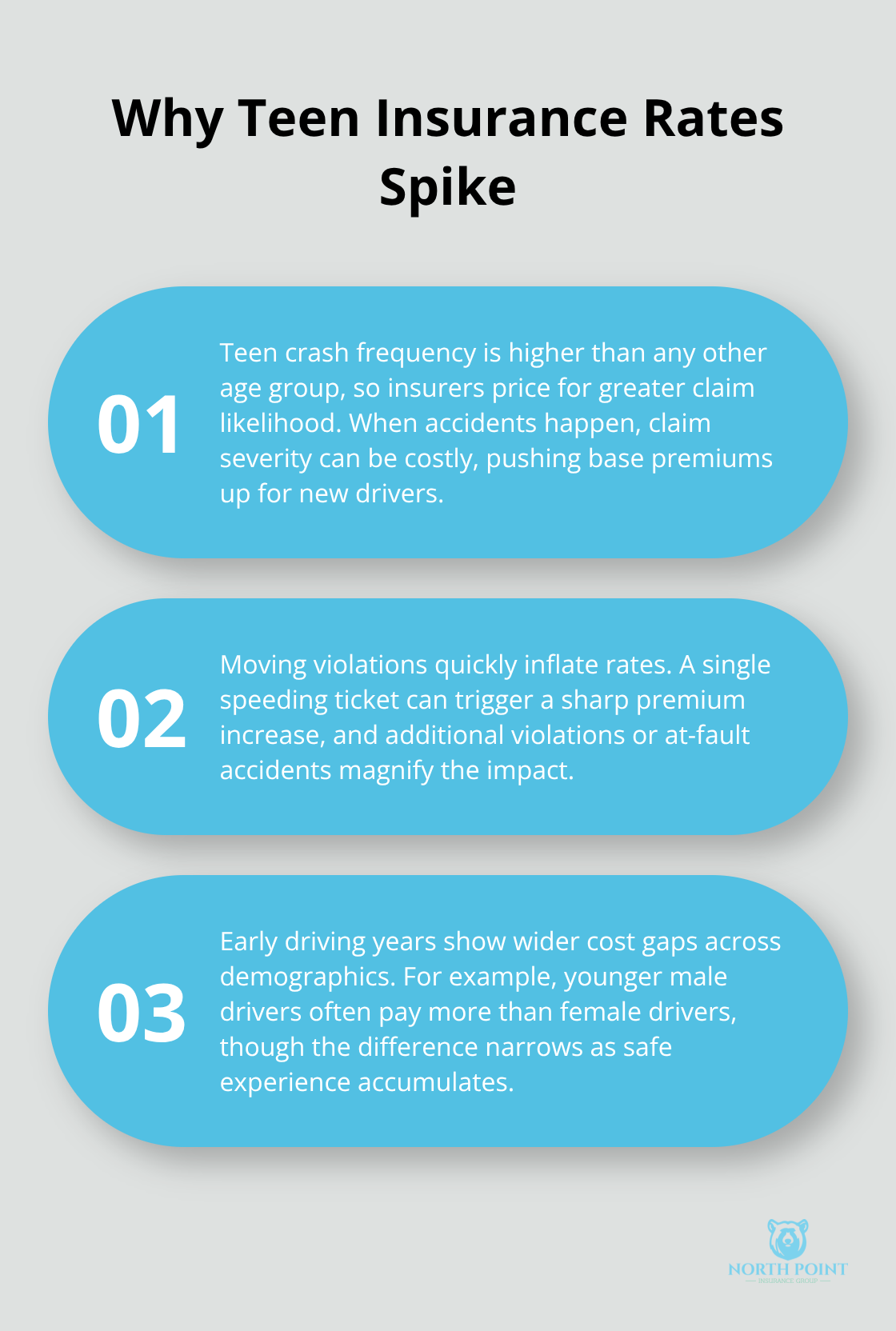
Teen drivers represent genuine financial risk to insurers, and the numbers back this up. According to Insurance.com data, a 16-year-old on a parent’s policy costs around $4,515 per year in full coverage, while that same teen on a separate policy jumps to $9,825 annually. The difference isn’t arbitrary-it reflects real accident patterns. Teens aged 16 to 19 have higher crash rates than any other age group, and when accidents happen, the claims tend to be expensive. A speeding ticket alone raises teen premiums by approximately 39% on average, and violations or accidents push costs even higher. Gender matters too: at age 16, male drivers pay roughly $1,082 more per year than female drivers, though this gap narrows to about $646 by age 19 as driving experience accumulates.
Age Drops Your Rate Faster Than You’d Think
Insurance premiums for teens decline significantly with each passing year. A 16-year-old male averages $10,928 annually for full coverage, but at age 19, that same driver drops to around $6,041-a 45% reduction in just three years. Females see similar trajectories, starting at $9,846 at 16 and falling to $5,395 by 19. GEICO consistently offers some of the lowest rates in this age range, with 16-year-olds averaging $7,831 annually and 19-year-olds at $4,504. This steady decline continues through age 25 if your teen maintains a clean driving record. Every year without an accident or violation works in your teen’s favor financially. State Farm extends their Good Student Discount through age 25, which means maintaining good grades now pays off for years.
Your Vehicle Choice Directly Impacts the Bill
The car your teen drives determines a substantial portion of the insurance cost. Newer vehicles with high repair costs and expensive parts raise premiums significantly. Conversely, older, safer models like the Honda CR-V and HR-V are among the cheapest to insure. When shopping for a teen vehicle, prioritize safety ratings and repair affordability over style or power. Dropping comprehensive coverage on an inexpensive vehicle can also cut costs meaningfully, though collision coverage typically stays necessary if you’re financing the car. Your lender may require full coverage anyway, so check your loan terms before making coverage adjustments.
Why Adding Your Teen to Your Policy Beats a Separate One
Adding your teen to your existing policy costs substantially less than purchasing a separate policy for them. A 16-year-old on a parent’s policy averages $4,515 annually, compared to $9,825 on their own-more than double the expense. This cost difference persists across all age ranges and carriers. Minors cannot sign insurance contracts independently, so a co-signer is required anyway, making the parent policy route both legally simpler and financially smarter. Shopping multiple carriers reveals different teen-add costs, so comparing quotes from different insurers helps you find the best rate for your specific situation.
Discounts Stack Up Quickly When You Know Where to Look
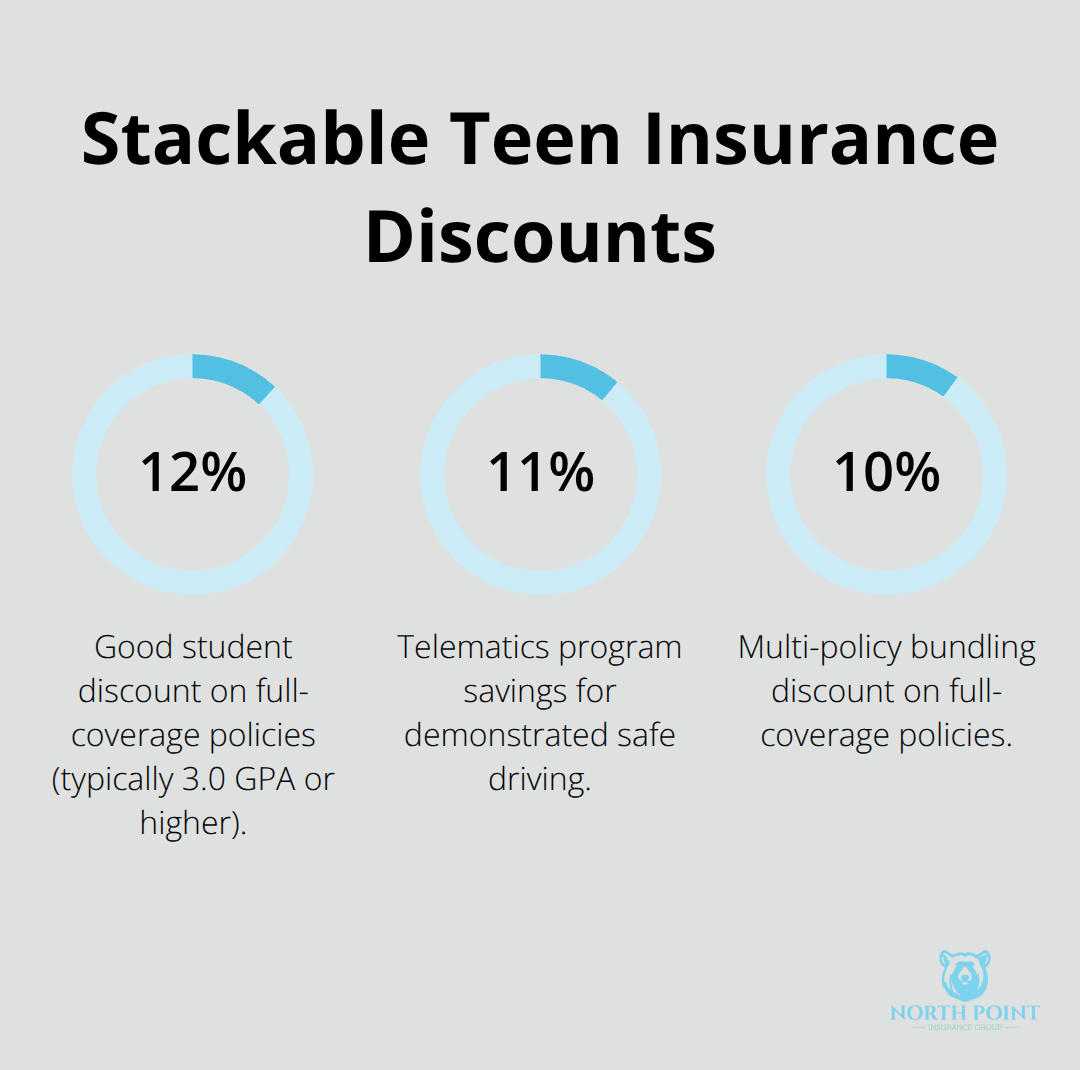
Good grades unlock real savings on teen policies. A good student discount (typically for a 3.0 GPA or higher) saves approximately 12% on full-coverage policies, and State Farm extends this discount through age 25. Driver training courses also reduce premiums-many insurers offer discounts when teens complete approved driver education programs. Telematics programs (driving-monitoring apps or devices) cut premiums by around 11% when they show safe driving patterns. Multi-policy bundling saves about 10% on full-coverage policies. These discounts combine, so a teen with good grades, completed driver training, and a telematics program active can see substantial savings compared to baseline rates.
How to Cut Teen Insurance Costs Right Now
Add Your Teen to Your Existing Policy, Not a Separate One
The single biggest financial decision you’ll make is whether to add your teen to your current policy or purchase separate coverage. Adding your teen to your existing policy instead of buying separate coverage saves thousands annually-we’re talking $5,310 per year for a 16-year-old based on Insurance.com data. That difference alone justifies doing the math before making any decision. A 16-year-old on a parent’s policy costs around $4,515 per year in full coverage, while that same teen on a separate policy jumps to $9,825 annually. Minors cannot sign insurance contracts independently, so a co-signer is required anyway, making the parent policy route both legally simpler and financially smarter. Shopping multiple carriers reveals different teen-add costs, so comparing quotes from different insurers helps you find the best rate for your specific situation.
Stack Discounts to Maximize Your Savings
Good grades deliver real savings on teen policies. A good student discount gives eligible drivers up to 10% off their car insurance, and State Farm extends this discount through age 25, so strong grades now create savings for years. Driver training courses reduce premiums too-many insurers reward teens who complete approved driver education programs, recognizing that formal training reduces accident risk. Telematics programs (driving-monitoring apps or devices that track safe habits) cut premiums by around 11% when they show safe driving patterns. Multi-policy bundling saves about 10% on full-coverage policies. A teen with good grades, completed driver training, and an active telematics program can save substantially compared to baseline rates. These savings compound rather than replace each other, so pursuing multiple discounts multiplies your financial benefit.
Choose a Vehicle That Keeps Insurance Costs Low
Your vehicle choice directly determines insurance cost, making it one of the easiest levers to control. Safer, older models like the Honda CR-V and HR-V rank among the cheapest to insure for young drivers, while newer vehicles with expensive parts and high repair costs push premiums significantly higher. Prioritize safety ratings and repair affordability over style when shopping for a teen vehicle. Insurance.com data shows that vehicle selection impacts the entire insurance equation, so starting with a practical, affordable car eliminates thousands in unnecessary costs. If you’re financing the vehicle, your lender likely requires collision and comprehensive coverage regardless of your preferences, so check loan terms before adjusting coverage options. On inexpensive vehicles you own outright, dropping comprehensive coverage while keeping collision can meaningfully reduce costs without leaving your teen completely exposed.
Adjust Coverage Based on What You Actually Own
The coverage strategy shifts based on whether the car is financed, owned free and clear, or how valuable it actually is. Lenders require full coverage on financed vehicles to protect their investment, so you won’t have flexibility there. For vehicles you own outright, you control what you pay for with adjustable liability, collision, and comprehensive options. An older, inexpensive car may not justify comprehensive coverage, but collision typically stays necessary since accidents happen regardless of vehicle age. Higher deductibles reduce your premium but increase what you’ll pay out-of-pocket after a claim, so balance your monthly budget against potential claim costs. These adjustments require honest assessment of your teen’s driving situation and your family’s financial capacity to handle unexpected expenses.
Compare Quotes Across Multiple Carriers
Different insurers price teen coverage differently, and the variation is substantial. Getting quotes from multiple carriers reveals which company offers the best rate for your specific teen, vehicle, and coverage needs. An independent agency shops 20+ carriers to deliver tailored coverage and competitive pricing, helping you navigate these differences without contacting each insurer individually. Online quote tools let you compare rates quickly, but working with an agent who understands your full situation often uncovers discounts and strategies you’d miss on your own. The time you invest in comparing quotes directly translates to dollars saved over the policy term.
How to Get the Best Deal on Teen Coverage
Shop Multiple Carriers to Find Your Actual Best Rate
Getting multiple quotes isn’t optional if you want the best rate for your teen-it’s the only way to know what you’re actually paying. Different carriers price teen drivers completely differently, and the gaps are enormous. Other carriers might quote $9,000 or more for identical coverage. That $1,200 difference compounds over four years of driving before your teen turns 20. Online quote tools let you run numbers quickly, but they only show you one carrier at a time, which defeats the purpose of comparison shopping. An independent agency shops 20+ carriers simultaneously, which means you see the actual range of pricing available instead of guessing whether your quote is competitive. This matters because teen premiums vary based on how each insurer weights factors like age, gender, driving record, vehicle type, and claims history. One carrier might heavily penalize male drivers while another applies minimal gender-based adjustments. Shopping reveals which insurer’s pricing philosophy aligns best with your teen’s specific situation.
Compare Identical Coverage Across All Quotes
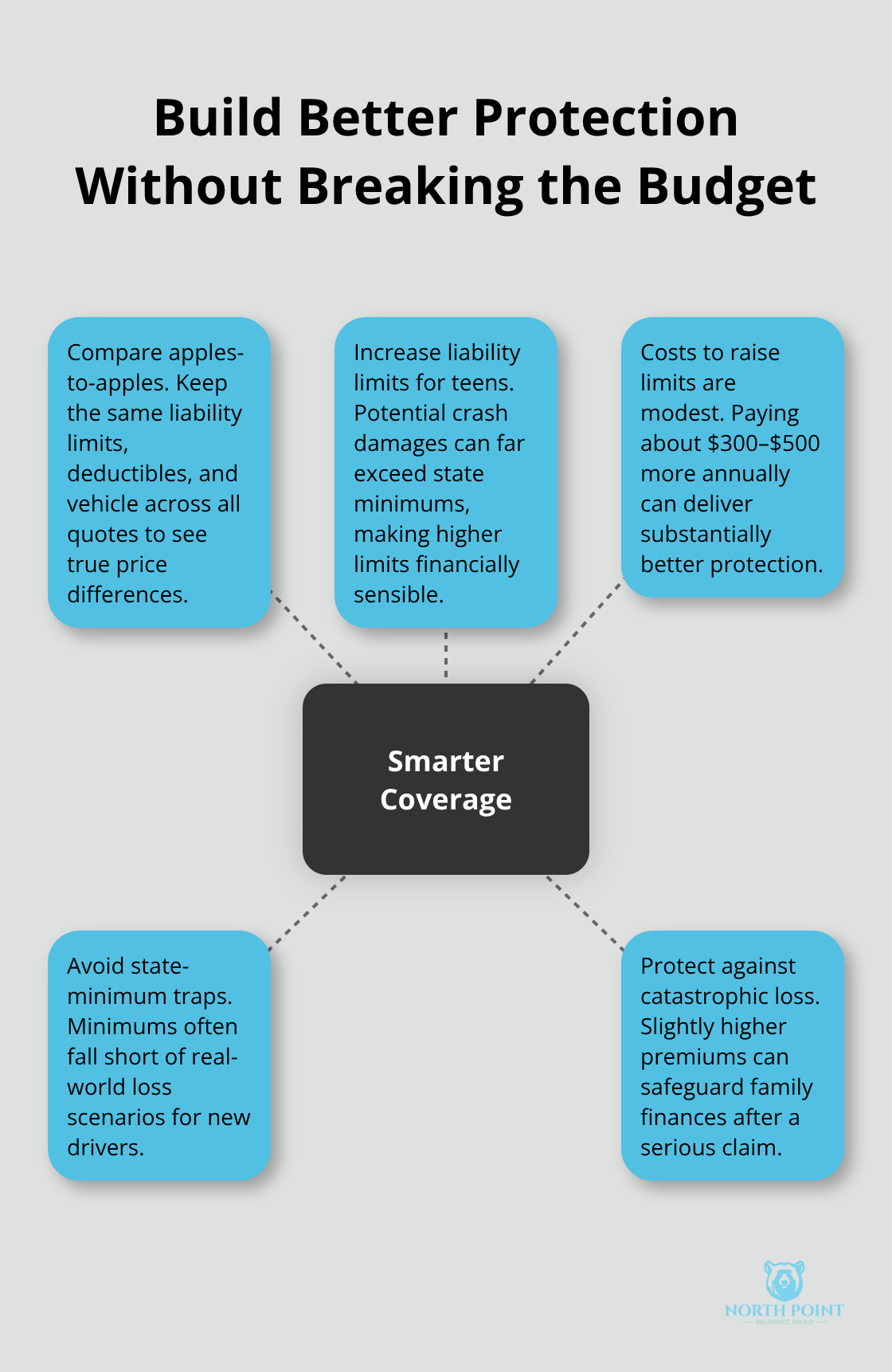
When you compare quotes, focus on identical coverage across all quotes-same liability limits, same deductibles, same vehicle. Apples-to-apples comparison prevents the trap of choosing a quote with lower liability limits just to hit a lower price. State minimum liability coverage varies significantly by state, but higher limits for teens make financial sense. A 16-year-old causing a serious accident could generate $50,000 or $100,000 in damages, and state minimums often fall far short of that reality. Insurance.com data shows that adjusting liability limits upward costs less than you’d expect-maybe $300 to $500 more annually for substantially better protection. This modest increase in premium delivers meaningful protection against catastrophic financial loss.
Ask About Discounts Before You Finalize Any Quote
Discounts shift the final price dramatically, so ask each carrier about available discounts before finalizing any quote. Good student discounts, driver training discounts, telematics programs, and multi-policy bundling should all factor into your comparison. Some carriers offer these discounts automatically, while others require you to ask. The carriers that make discounts easy to access and stack together tend to deliver the lowest net cost after all savings apply, not just the lowest base rate. Stacking multiple discounts (good grades plus driver training plus telematics) creates substantial savings that a single-discount approach misses entirely.
Final Thoughts
The path to affordable teen auto insurance starts with one decision: add your teen to your existing policy instead of buying separate coverage. That single choice saves thousands annually compared to a standalone policy. From there, stacking discounts multiplies your savings further-good grades, completed driver training, and telematics programs work together to cut premiums by meaningful amounts. Vehicle selection matters equally, as choosing a safe, affordable car eliminates unnecessary costs before coverage even begins.
These teen auto insurance tips work because they address the actual factors insurers use to calculate rates. Your teen’s age will drop their premium automatically each year through age 25, especially with a clean driving record. The discounts and coverage adjustments you make now compound over time, creating substantial financial benefit as your teen gains driving experience. Safe driving habits developed early deliver long-term value beyond just lower insurance costs, protecting your teen’s life and the lives of others on the road.
Getting the right coverage requires comparing quotes across multiple carriers to see what you’re actually paying. Different insurers price teen drivers differently, and gaps between quotes can exceed $1,200 annually for identical coverage. Contact North Point Insurance Group to explore which discounts apply to your teen’s specific situation and get competitive quotes tailored to your needs.
The information provided in this blog is for general informational purposes only and does not constitute legal, financial, or insurance advice. Coverage options, terms, and availability may vary. Please consult with a licensed professional for advice specific to your situation. Artificial intelligence may have been used to generate text and images in some blog articles and may contain inacuracies.

