
Builders Risk Coverage: Shielding Your Construction Projects
Construction projects face real financial risks from damage, theft, and weather events. Builders risk coverage protects your investment when these losses happen on the job site.
At North Point Insurance Group, we’ve seen too many contractors operate without adequate protection. This guide shows you what builders risk coverage actually covers, where policies fall short, and how to select the right protection for your specific project.
What Builders Risk Actually Covers
Builders risk coverage protects the structure itself, materials on-site, materials in transit to the job, and temporary structures like scaffolding and fencing. It covers fire, lightning, hail, explosions, theft, vandalism, and weather-related damage during the construction phase. Coverage starts when your construction contract is signed and ends at project completion, occupancy, or policy expiration-whichever comes first. This protection differs fundamentally from standard homeowners or commercial property insurance, which won’t protect an active construction site.
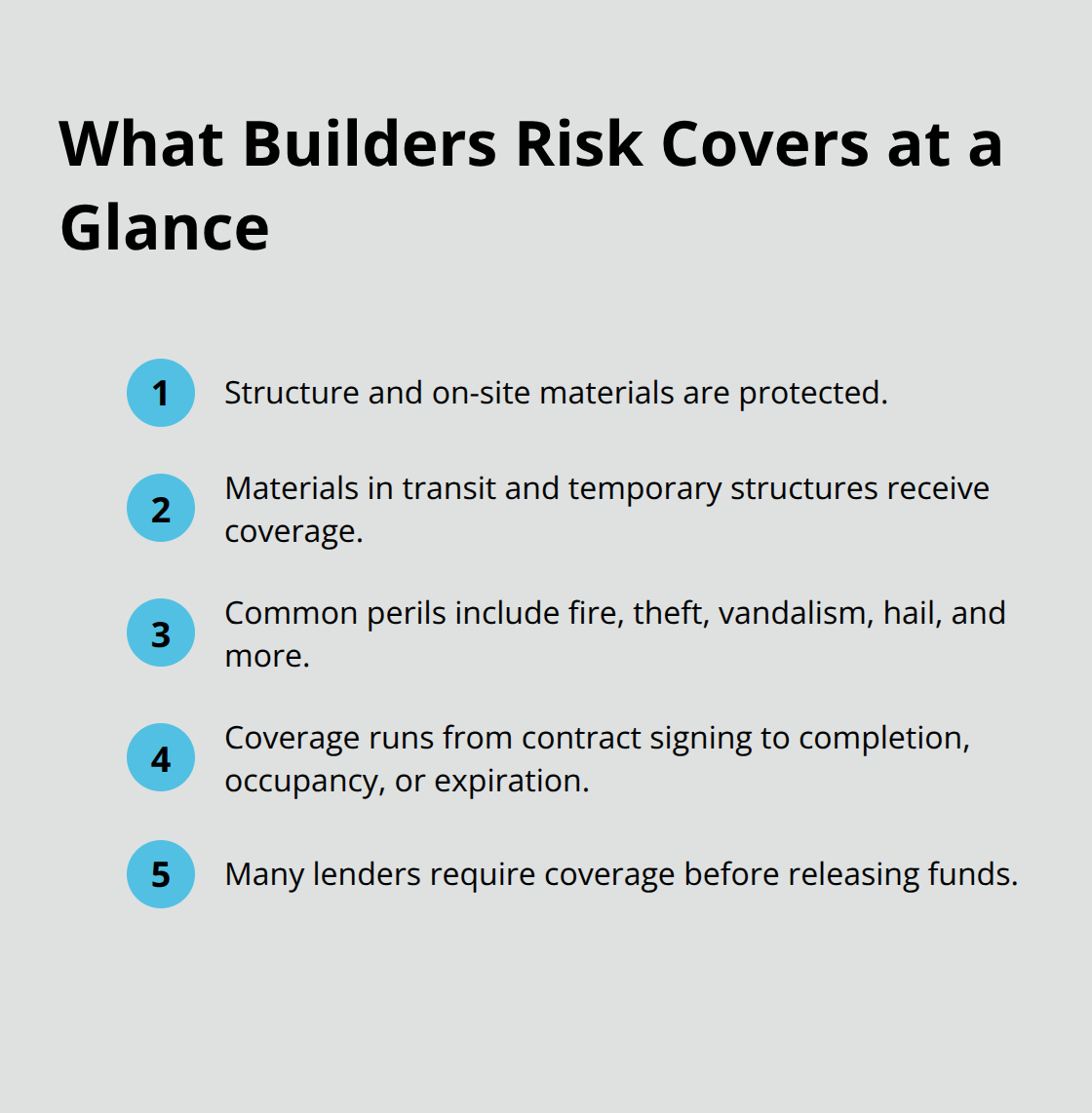
Many lenders require builders risk before releasing construction funds, so starting coverage early aligns with financing requirements and contract obligations.
Material and Equipment Protection
On-site materials and supplies receive protection under builders risk, which matters because construction material theft costs the sector between $300 million and $1 billion annually. Copper, tools, and finished materials rank among the prime targets for theft. Your policy covers materials stored temporarily at the site, in transit from suppliers, and in temporary storage buildings. However, contractor tools and equipment often face exclusion from standard builders risk policies-this represents a critical gap many contractors miss. If your crew’s power tools, compressors, and specialized equipment aren’t listed separately on the policy or covered under a contractor’s equipment endorsement, theft or damage to those items won’t receive coverage. You need to confirm with your agent whether tools are included or require a separate inland marine or contractor’s equipment policy.
Weather and Delay Costs
Weather-related damage during construction-wind, hail, heavy rain causing water intrusion, or temporary structure collapse-falls under standard builders risk coverage in most policies. However, soft costs caused by weather delays often lack coverage unless you add an endorsement. Soft costs include extended loan interest, lost rental income, real estate taxes, and permit reapplication fees when construction delays occur. A project delayed by three months could face thousands in additional financing costs alone, yet many contractors don’t budget for soft costs coverage. You should ask your agent whether your quote includes soft costs protection, particularly if your project timeline is tight or your location experiences seasonal weather challenges.
Coverage Timing and Lender Requirements
Your builders risk policy must align with your project schedule and lender expectations. Coverage typically begins when your construction contract is signed, though some policies start only after foundation work begins or when the site shows active construction activity. Lenders often require proof of coverage before releasing funds, which means delays in obtaining a policy can delay your entire project timeline. You should coordinate with your lender early to understand their specific coverage requirements and any documentation they need. This coordination prevents underwriting surprises and ensures your project moves forward without insurance-related setbacks.
Where Builders Risk Policies Fall Short
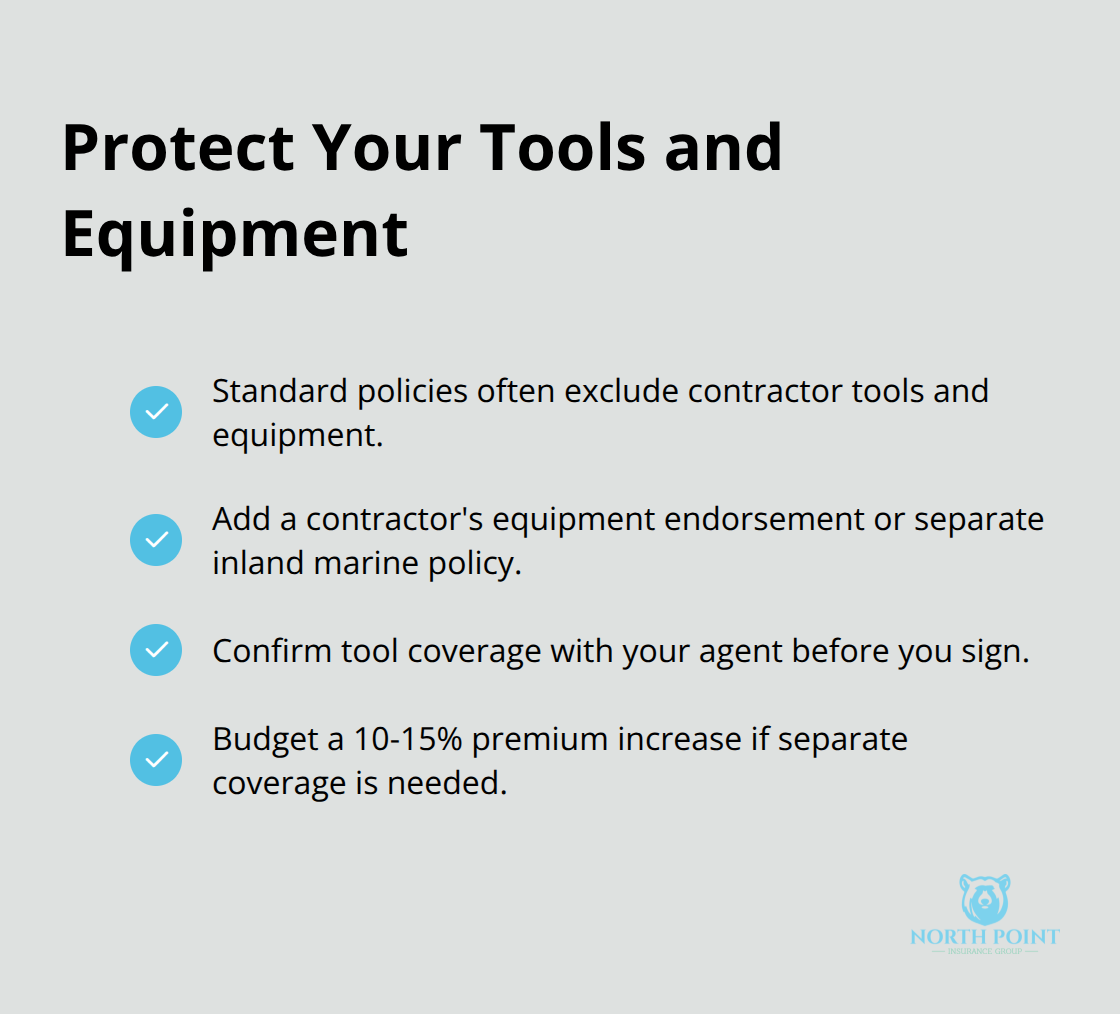
Most contractors discover coverage gaps only after a loss occurs, and by then the damage is done. Standard builders risk policies exclude contractor tools and equipment entirely, forcing you to purchase separate coverage or accept the risk yourself. A crew’s power tools, compressors, scaffolding equipment, and specialized machinery represent tens of thousands of dollars in value, yet these items sit outside the main policy. You must ask your agent explicitly whether tools are covered under your builders risk quote or if you need a contractor’s equipment endorsement or inland marine policy. The cost difference matters-adding equipment coverage typically runs 10-15% more than the base premium, but losing an uninsured tool inventory during theft can cost exponentially more.
Tools and Equipment Left Unprotected
Contractor tools and equipment represent a blind spot in most standard builders risk policies. Your crew’s power tools, compressors, and specialized machinery fall outside coverage unless you specifically add them through a contractor’s equipment endorsement or separate inland marine policy. Construction material theft costs the industry between $300 million and $1 billion annually, and thieves target high-value equipment as readily as they target copper and finished materials. You should confirm with your agent whether your quote includes tool coverage before you sign the policy. If tools require separate coverage, factor that 10-15% premium increase into your project budget rather than discovering the gap after theft occurs.
Materials That Exceed Policy Limits
High-value material shipments create another exposure many contractors underestimate. If your project includes copper piping, specialty HVAC equipment, or finished materials worth $150,000 or more, your standard builders risk limit may not reflect the actual replacement cost. Policies often cap coverage at the total construction budget, but material price increases and change orders can push actual on-site inventory well beyond the original estimate. Thieves specifically target copper and high-demand components, making material theft a real financial threat on active job sites. You should conduct a detailed inventory of all materials scheduled to arrive during each construction phase and compare that total against your policy limit. If limits fall short, request an increased limit endorsement before materials arrive on-site rather than scrambling after a theft.
Defective Work and Hidden Exclusions
Damage caused by subcontractor defective work sits in a gray area most builders risk policies don’t adequately address. If a roofer installs flashing incorrectly and water damage follows, the policy typically excludes coverage for the faulty installation itself but may cover ensuing damage to other property. This distinction matters because you could face tens of thousands in water damage claims while the defective work repair remains your responsibility. Additionally, many policies exclude soft costs entirely unless you specifically add them-meaning delays from weather, permit issues, or supply chain problems leave you absorbing extended loan interest and lost rental income. You should request a detailed policy summary showing exactly what soft costs are covered, what exclusions apply to subcontractor work, and whether ensuing loss provisions protect you from cascading damage caused by workmanship failures.
Soft Costs That Drain Your Budget
Weather delays, permit complications, and supply chain disruptions extend project timelines, and soft costs accumulate quickly during those extensions. Extended loan interest, lost rental income, real estate taxes, and permit reapplication fees add up to thousands of dollars per month on larger projects. Most standard builders risk policies don’t cover these costs unless you add a soft costs endorsement, leaving you to absorb the financial impact personally. You should ask your agent whether your quote includes soft costs protection and what specific expenses the endorsement covers. This protection becomes especially valuable on projects with tight timelines or in locations prone to seasonal weather challenges.
These gaps in standard builders risk coverage create real financial exposure on your job site. Understanding what your policy excludes matters far more than understanding what it covers, because exclusions determine where your project remains vulnerable. The next section shows you how to evaluate coverage options across multiple carriers and work with an agent to identify the specific exposures unique to your project.
Selecting the Right Coverage for Your Specific Project
Calculate Your True Coverage Needs
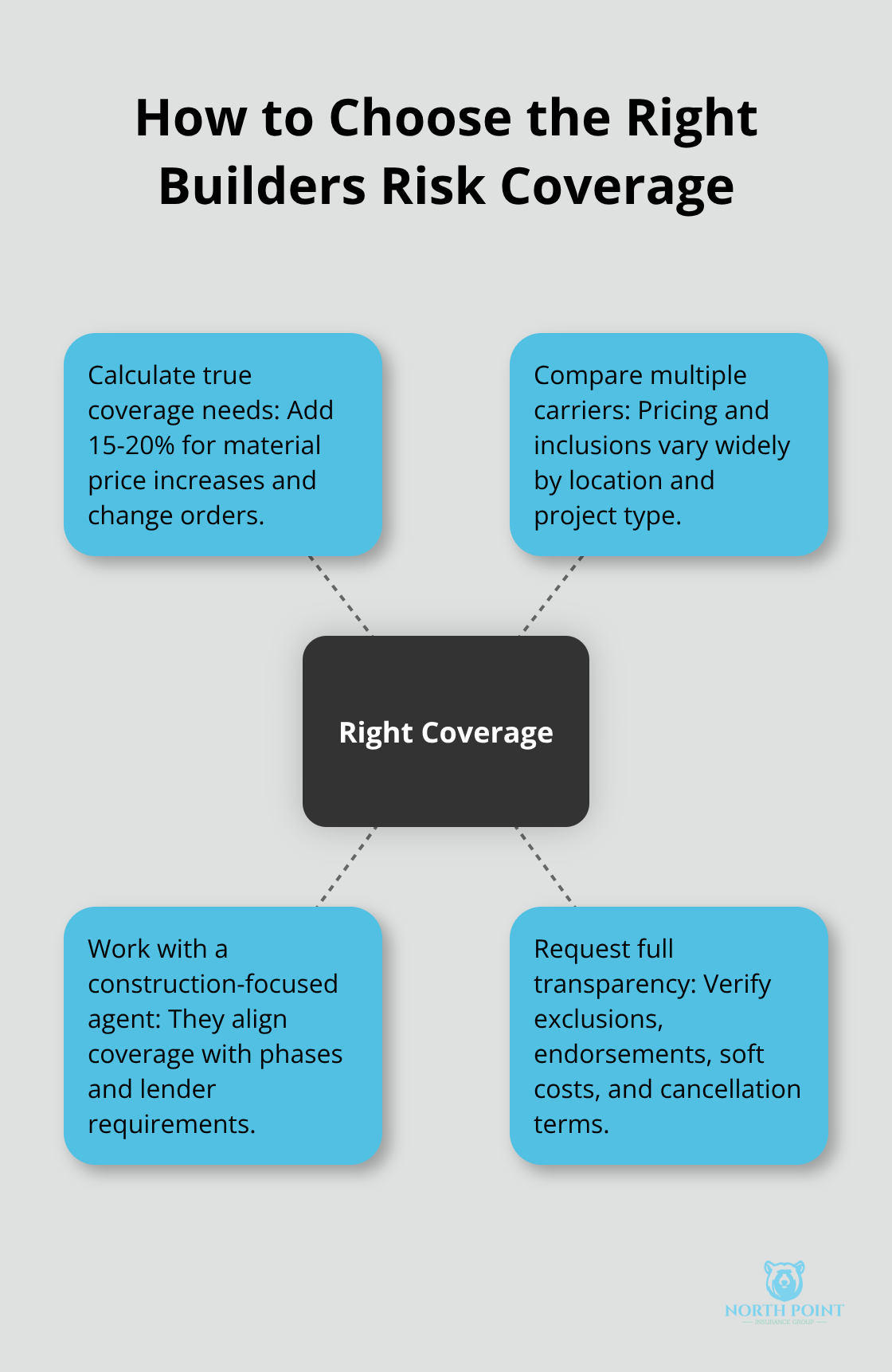
Start by calculating your total project cost accurately, then add 15-20% for material price increases and change orders. This adjusted figure becomes your baseline coverage limit, not your original budget estimate. Many contractors set policy limits based on initial project estimates, then face coverage shortfalls when material costs spike or scope expands. A $500,000 renovation project with copper plumbing and high-end HVAC equipment might require $600,000 in coverage limits once you account for inflation and contingencies.
Document every material type scheduled for each construction phase-copper, electrical components, finished materials, and equipment-because this inventory reveals whether your standard builders risk limit actually matches your real on-site exposure. This detailed accounting prevents the common mistake of underinsuring high-value shipments that arrive mid-project.
Compare Quotes Across Multiple Carriers
Request quotes from at least three carriers, not just one, because premium variation by location and project type runs substantial. A New York project quoted around $2,500 annually for $700,000 in coverage illustrates how dense markets command higher premiums than suburban areas. New Jersey examples show roughly $780 annually for similar coverage amounts, demonstrating how geography drives costs significantly.
Compare what each quote includes: one carrier might exclude tools entirely while another offers a contractor’s equipment endorsement for 12% more. Ask each carrier explicitly whether soft costs coverage is included, what deductibles apply, and whether they require foundation work completed before binding coverage. Some insurers reject applications if recent street-view imagery shows only foundation stage work, creating timing complications in underwriting.
Work with a Construction-Focused Agent
Work with an agent who specializes in construction risk, not someone handling builders risk as a side offering. Construction-focused agents understand that your coverage needs change as the project progresses through framing, enclosure, systems installation, and final stages. They identify exposures you won’t catch yourself-like whether materials stored in temporary on-site buildings receive the same coverage as materials stored indoors, or whether your policy covers testing and inspections required by local codes.
An experienced agent coordinates with your lender to confirm coverage aligns with their requirements before funds are released, preventing delays. They also help you adjust coverage mid-project if your scope expands or material costs increase, rather than leaving you underinsured when change orders occur.
Request Complete Policy Transparency
Request a detailed policy summary showing exactly what your quote covers, what exclusions apply, and whether endorsements for tools, soft costs, flood protection, or debris removal are included or require additional premium. This transparency prevents the common mistake of signing a policy only to discover critical gaps after a loss occurs.
Ask your agent whether the policy includes an ensuing loss provision that covers damage to other property caused by subcontractor defective work, since this protects you from cascading damage claims. Finally, confirm the policy’s cancellation terms-whether it’s non-refundable if your project completes early, or whether you can convert it to standard property insurance after occupancy without losing premium value.
Final Thoughts
Builders risk coverage protects your construction investment from the financial damage that stops projects cold. The gaps we outlined-uninsured tools, inadequate material limits, missing soft costs protection-represent real exposures that drain budgets when losses occur. You now understand what standard policies exclude, why those exclusions matter, and how to calculate coverage that actually matches your project’s true value.
The difference between adequate protection and discovering coverage gaps after a loss comes down to one decision: working with an agent who understands construction risk. Local agents with construction expertise identify exposures you won’t catch yourself and coordinate with your lender before funds are released. They adjust coverage as your project scope changes and explain exactly what your policy covers before you sign, preventing the costly mistakes that plague contractors operating with incomplete information.
Contact North Point Insurance Group to schedule a construction risk consultation and bring your project timeline, total construction cost, material inventory, and lender requirements. Our agents request quotes from multiple carriers, compare what each covers, and identify the specific endorsements your project needs. This conversation takes hours now but prevents financial disaster later when weather delays extend your timeline or material theft hits your job site.
The information provided in this blog is for general informational purposes only and does not constitute legal, financial, or insurance advice. Coverage options, terms, and availability may vary. Please consult with a licensed professional for advice specific to your situation. Artificial intelligence may have been used to generate text and images in some blog articles and may contain inacuracies.

